Beyond the Degree: How the ATF AI Challenge Helps Recent Nigerian Graduates Build a High-Value Career

Beyond the Degree: How the ATF AI Challenge Helps Recent Nigerian Graduates Build a High-Value Career
For a Nigerian graduate who finished school between 2023 and 2025, the job market feels like a race where the finish line keeps moving. While a university degree was once a "meal ticket," today’s economy demands a different currency: Applied Intelligence.
In Lagos, Akure, Ekiti, and across major Nigerian cities, thousands of brilliant graduates are currently underemployed, working roles that don't match their intellectual capacity, or waiting for "the big break" that never seems to come. At the same time, the global AI economy is screaming for talent, not just people who can "use" AI, but people who can build with it.
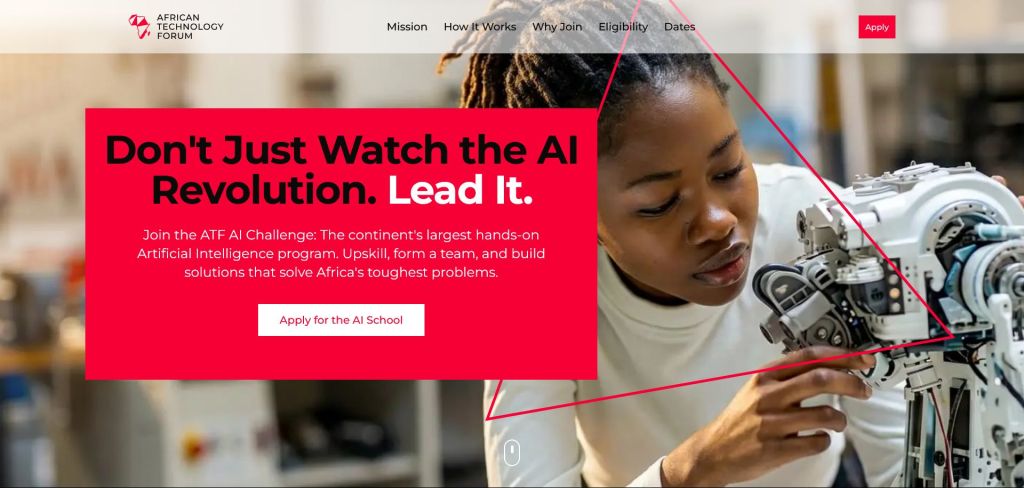
The ATF AI Challenge, backed by $1 million from Google.org, is specifically designed for this 3-year post-graduation window. It isn't just a learning program; it is a professional "finishing school" that transforms a degree-holder into a high-value technologist.
This guide explores how young professionals in Southwest Nigeria can leverage this opportunity to bypass the traditional, slow-moving job market and secure a seat at the table of the 2030 digital economy.
In This Article
- The "Degree Gap" in Nigeria's Job Market
- Why Recent Graduates are the "Golden Demographic" for AI
- Can Non-Tech Graduates Join? The Power of Domain Expertise
- The "Bridge" to Global Employment
- How to Balance the Challenge with a 9-to-5 or NYSC
- The Gist: Key Takeaways
- Frequently Asked Questions
The "Degree Gap" in Nigeria's Job Market
DIRECT ANSWER: The "Degree Gap" is the disconnect between the theoretical knowledge taught in Nigerian universities and the practical, technical skills required by modern global employers. While universities focus on foundational concepts, the market demands proficiency in tools like Python, Git, and Large Language Model (LLM) integration—skills the ATF AI Challenge provides for free.
If you graduated from UNILAG, LASU, EKSU or FUTA recently, you likely have a strong work ethic and deep theoretical knowledge. However, when you open a job description for a Remote Data Analyst or an AI Operations Specialist, you see requirements for "Git workflows," "API integration," and "Prompt Engineering."
These are things that weren't in your 400-level syllabus. This gap is why many graduates find themselves stuck in entry-level administrative roles. The ATF AI Challenge acts as the bridge, taking your existing intellectual foundation and layering on the high-demand technical skills that make you "hirable" globally.
Why Recent Graduates are the "Golden Demographic" for AI
DIRECT ANSWER: ATF defines "young professionals" as those within 3 years of graduation because they possess the perfect mix of academic discipline, adaptability, and high stakes. Unlike mid-career professionals who may be resistant to new tech, or fresh students who lack professional context, recent graduates are primed to learn and deploy new technologies like AI at a rapid pace.
For the African Technology Forum (ATF), you are the priority. You are old enough to understand the "real-world" problems of Nigeria (expensive food, healthcare gaps, power issues) but young enough to be "digitally native."
The 3-Year Rule: If you finished your final exams in 2023, 2024, or 2025, you are in the "sweet spot." You are still in the habit of learning, but you are also hungry for financial independence. The program uses this hunger to drive you through the intensive Learn, Build, Launch pipeline.
Can Non-Tech Graduates Join? The Power of Domain Expertise
DIRECT ANSWER: Yes. In fact, some of the most successful AI solutions are built by teams where the "subject matter expert" is not a coder. A Law graduate knows the bottlenecks in Nigerian courts; an Agricultural Science graduate understands Ekiti's soil problems. When these graduates team up with developers in the "BUILD" phase, they create products that actually solve problems, which is exactly what investors look for.
One of the biggest myths in Nigeria is that "tech is only for CS students." In the ATF AI Challenge, the goal is to build MVPs (Minimum Viable Products).
Consider these scenarios for Ekiti/Akure graduates:
- The Health Grad (FUOYE/ABUAD): You understand patient flow. You can lead a team to build an AI triage system for rural clinics.
- The Agric Grad (FUTA): You know the pests affecting Ondo State cocoa. You can guide a developer on how to train a vision model to detect those specific pests.
- The Finance Grad (EKSU): You understand the credit gap for small businesses. You can help build an AI-driven credit-scoring model.
The program encourages multidisciplinary teams. Your degree isn't "wasted"; it's your competitive advantage.
The "Bridge" to Global Employment
DIRECT ANSWER: The ATF AI Challenge solves the "no experience" paradox. Most global jobs require 2+ years of experience, which graduates don't have. By participating in Pillar 3 (LAUNCH) and presenting a functional AI product to a curated audience of employers, you effectively gain "project-based experience" that is more valuable to a recruiter than a generic CV.
When you sit for a remote interview with a company in London or San Francisco, they don't just want to see your degree from Akure. They want to see your GitHub repository. They want to know: "Did you build something that works?"
By the end of this challenge, you will have:
- A verified technical portfolio (Python/AI projects).
- Mentorship from global experts (who can provide referrals).
- Direct access to employers during the Demo Days in Lagos.
This is how you go from a ₦100,000/month local role to a $1,500/month global junior role.
How to Balance the Challenge with a 9-to-5 or NYSC
DIRECT ANSWER: The first stage (AI School) is a 4-week virtual intensive requiring 10–15 hours per week. This is designed to be asynchronous, meaning you can complete the modules in the evenings or on weekends, making it compatible with a full-time job or NYSC primary assignment.
Many young professionals worry about the time commitment. Here is a realistic breakdown for a busy Nigerian grad:
- The Commuter (Lagos/Akure): Use your transit time (if you aren't driving) to watch the video modules.
- The NYSC Corp Member: Use your "CDS days" or evenings in the lodge to work on your Python scripts.
- The Early-Career Worker: Dedicate 2 hours every evening (8 PM – 10 PM) to the curriculum.
The program is structured to be intense but flexible. The "Last Mile" of tech education is about consistency, not just brilliance.
The Gist: Key Takeaways
- Target: Graduates from 2023–2025 are the primary focus for this $1M initiative.
- Skill Shift: It moves you from theoretical knowledge to "Applied AI" skills (Python, Git, LLMs).
- Non-Tech Friendly: Your degree in Law, Agric, or Health is a "domain expertise" asset, not a barrier.
- Portfolio over CV: You finish the program with a real product, which is what global employers actually hire for.
- Sign Up: https://bit.ly/atfxw3
- Deadline: May 31, 2026
Frequently Asked Questions
I graduated more than 3 years ago. Can I still apply?
The program is strictly targeted at "young professionals" within a 3-year window. However, if you are a few months outside that window but have a strong project idea, it is still worth registering your interest to see if specialized cohorts or partner programs (like those via Google.org) become available.
What if I don't have a team for the "BUILD" phase?
Don't worry. The "LEARN" phase (Pillar 1) is where you will meet other participants. ATF provides a platform for people to network and form multidisciplinary teams based on their skills and interests.
Is there a fee for the Demo Day or the Cloud credits?
No. The compute power, API credits, and event access are fully covered by the Google.org grant. This is a "zero-cost" entry into a high-cost industry.
Can I participate if I am currently serving (NYSC)?
Absolutely. In fact, many of the most successful tech transitions in Nigeria happen during the NYSC year. This is the perfect time to build your "second skill."
How do I know if my laptop is good enough?
If your laptop can run a web browser and a code editor like VS Code, you are likely fine. Since much of the AI work uses cloud-based resources (funded by the program), you don't necessarily need a high-end "gaming" computer to build basic AI models.
Conclusion: Don't Wait for the Economy to Change
Nigeria’s economy is in a state of flux, but the demand for intelligence is constant. If you are a graduate, you have two choices: wait for the local job market to improve, or build the skills that make the local market irrelevant to your earning potential.
The ATF AI Challenge is the most credible, fully-funded pathway available right now. It takes the "potential" of your degree and converts it into the "impact" of a technical career.
**Register today and join the pipeline: https://bit.ly/atfxw3
Last Updated: May 2026 Disclaimer: Career outcomes are dependent on individual effort and completion of the program. GistCaster provides information and does not guarantee employment or funding.