Court frees Oshodin, firm from money laundering charges involving $12m linked to NSA office
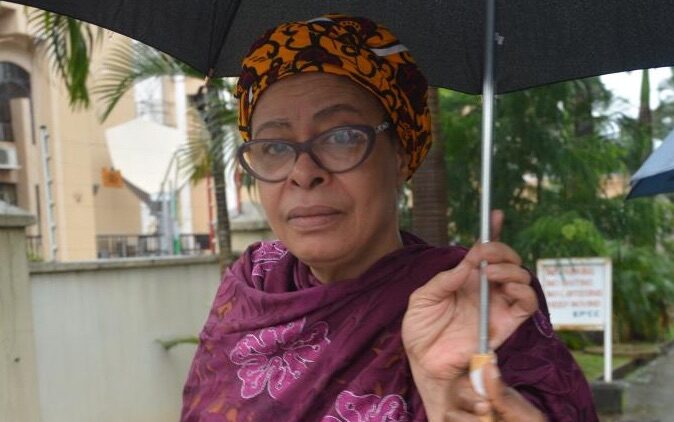
Add us on Google The Federal High Court in Abuja has discharged and acquitted Isabella Oshodin and her company, Bob Oshodin Organisation Ltd, in a $12 million money laundering case filed by the Economic and Financial Crimes Commission (EFCC). The judge, James Omotosho, held that the prosecution failed to prove the charges beyond reasonable doubt or establish the existence of any predicate offence. PREMIUM TIMES understands that the judgement was delivered on 10 March but could only confirm it on Friday after obtaining a certified true copy of the verdict. The judge ruled that although conspiracy is often difficult to prove through direct evidence, the prosecution did not present any direct or circumstantial evidence showing that the defendants had a meeting of the minds to carry out unlawful activity. Stay Ahead with Premium Times Follow us on Google News and never miss breaking stories, investigations, and in-depth reporting. Add as a preferred source on Google /* 1. Wrapper & Container / .gn-wrapper { width: 100%; padding: 20px 0; display: flex; justify-content: center; } .gn-card { width: 100%; max-width: 600px; background: #ffffff; padding: 28px; border-radius: 16px; border: 1px solid #e0e0e0; box-shadow: 0 4px 12px rgba(0,0,0,0.08); font-family: 'Segoe UI', Roboto, Helvetica, Arial, sans-serif; } / 2. Header & Premium Times Logo / .gn-header { display: flex; align-items: center; gap: 14px; margin-bottom: 16px; } .gn-logo { height: 36px; / Slightly larger to balance the new text sizes / width: auto; object-fit: contain; } .gn-title { font-size: 22px; margin: 0; color: #1a1a1a; font-weight: 800; } / 3. The Bold Description / .gn-description { font-size: 18px; / Larger size / font-weight: 600; / Bolder weight / color: #202124; / Darker for readability / margin: 0 0 24px 0; line-height: 1.5; } / 4. The High-Impact Button / .gn-button { display: inline-flex; align-items: center; gap: 12px; padding: 14px 24px; border: 1px solid #dadce0; border-radius: 30px; / Modern pill shape / text-decoration: none; background: #ffffff; color: #3c4043; transition: all 0.2s ease-in-out; box-shadow: 0 1px 2px rgba(60,64,67,0.1); } .gn-button-text { font-size: 17px; / Increased font size / font-weight: 700; / Maximum boldness / letter-spacing: 0.1px; } .gn-button:hover { background: #f8f9fa; border-color: #d2d2d2; box-shadow: 0 2px 4px rgba(60,64,67,0.2); transform: translateY(-1px); } .gn-icon { width: 22px; / Matched to larger text size / height: 22px; object-fit: contain; } / 5. 📱 Mobile Optimization / @media (max-width: 480px) { .gn-card { padding: 20px; } .gn-header { flex-direction: column; align-items: flex-start; gap: 10px; } .gn-title { font-size: 20px; } .gn-description { font-size: 16px; } .gn-button { width: 100%; justify-content: center; box-sizing: border-box; padding: 14px 10px; } .gn-button-text { font-size: 15px; / Scaled slightly for small screens / } } He added that no agreement or coordinated intention was established to support the allegation. The court also found that the prosecution failed to prove that the funds received by the defendants were proceeds of unlawful activity, a key requirement under the Money Laundering (Prohibition) Act, 2011 (as amended). Mr Omotosho stated that there was no credible evidence linking the funds to any criminal breach of trust or other illicit conduct. The EFCC had alleged that the funds were unlawfully from the Office of the former National Security Adviser Sambo Dasuki. A PREMIUM TIMES investigation published in November 2014 shed light on how Mrs Oshodin and her husband acquired properties in the United States after receiving funds transferred by the NSA office. However, the court held that the allegation that the defendant received funds from the NSA office unlawfully was not supported by reliable evidence. It noted that witnesses were unable to confirm that the payments were made for unlawful purposes or that the funds were diverted or improperly appropriated. Mr Omotosho further held that the prosecution did not prove that the defendants knew or ought to have known that the funds were illicit. He emphasised that criminal liability under the law requires proof of knowledge or reasonable suspicion that the funds were proceeds of crime. In reaching its decision, the court relied on documentary evidence presented by the defence, including a contract of sale relating to a factory owned by the defendants. The defence maintained that the funds represented payments for the purchase of the factory and for training programmes for ex-militants from the Niger Delta. The judge found that the contract of sale was consistent with the defence’s explanation and noted that attempts by the prosecution to discredit the document were inconclusive. The court also faulted the prosecution for failing to call key witnesses, including Mr Dasuki, whom it described as a vital witness capable of clarifying the purpose of the payments. It held that the absence of such testimony created gaps in the prosecution’s case, which must be resolved in favour of the defendants. On allegations that the defendants used proceeds of crime to acquire properties abroad, the court held that the prosecution did not provide sufficient evidence. It noted that no credible documentation was produced to establish ownership or confirm the alleged transactions. Mr Omotosho described the prosecution’s case as speculative and reiterated that assumptions cannot replace credible evidence in criminal proceedings. He concluded that the prosecution failed to establish any unlawful conduct or link the funds to illicit activity. Accordingly, the court discharged and acquitted the defendants on all counts. How it started Mrs Oshodin, her husband Robert Oshodin, and their firm were arraigned on 25 amended charge bordering on alleged money laundering and related offences. In the charge marked FHC/ABJ/CR/114/2019, the EFCC alleged that the defendants conspired in 2014 to commit money laundering within the jurisdiction of the court. The prosecution also accused the defendants of transferring millions of dollars from Nigeria to accounts in the United States, including payments to Portfolio Escrow Company, Wells Fargo Bank, and Robin G. Mathis PLLC. It maintained that the defendants knew or ought to have known that the funds were proceeds of unlawful activities. Other counts alleged that the defendants possessed about $12 million and various sums in naira believed to be proceeds of criminal breach of trust. The EFCC further alleged that part of the funds was used to acquire properties in the United States, including real estate in Los Angeles, California, and McLean, Virginia, through corporate entities. The trial Mrs Oshodin and her company pleaded not guilty to the charges read to them. The prosecution lawyer, H. M. Mohammed called 12 witnesses to establish the case against the defendants. Those invited include Faruk Idiaro of Access Bank, Remigius Ugwu of Zenith Bank, Moses Oluwatosin Shittu of Union Bank, Aderemi Ezekiel Olaoluwa of First Bank and Jackson Joseph Edet of the EFCC. Others were Sweet Adesuwa Okundaye of the Federal Ministry of Justice, Architect Yunusa Yakubu, Richard Okolocha, Mariam Oricha, Yazidu Ibrahim, Hassan Saidu, and Shuaibu Salisu. He tendered several documents, including bank statements, account opening records, and correspondence involving financial institutions and government agencies. Bank officials who testified confirmed that large sums were paid into accounts linked to the defendants from the Office of the National Security Adviser, with transaction narrations referencing government sources. An EFCC investigator told the court that the investigation was based on intelligence indicating that payments were made without supporting contracts or approvals. He also alleged that funds traced to the defendants were used to acquire properties abroad. Officials from the Office of the National Security Adviser testified that payment instructions were processed based on directives from the National Security Adviser, sometimes without detailed documentation. However, they stated that they were not aware of any contract relating to the alleged sale of the defendants’ factory. Under cross-examination, some witnesses acknowledged gaps in the investigation, including the absence of a comprehensive forensic audit and limited access to internal records of the Office of the National Security Adviser. In her defence, her legal team led by Adegboyega Awomolo, who is a Senior Advocate of Nigeria (SAN), also called the first defendant, Mrs Oshodin, as a witness. Mrs Oshodin maintained that the funds were legitimate payments linked to the sale of the company’s factory and related business activities, including training programmes. She denied any involvement in money laundering. Both the prosecution and defence presented their final written addresses, with the prosecution urging the court to convict and the defence arguing that the essential elements of the offences had not been proved. After reviewing the evidence, the court held that the prosecution failed to discharge the burden of proof required in criminal cases and resolved all doubts in favour of the defendants. Backstory An investigation by this newspaper found that the case against the Oshodins emerged from broader allegations surrounding Mr Dasuki. In June 2012, then-President Goodluck Jonathan appointed Mr Dasuki to coordinate Nigeria’s counter-terrorism efforts against Boko Haram. According to the investigation, within two months in the role, Mr Dasuki’s office approved the transfer of N270 million to Robert Oshodin, a Nigerian furniture manufacturer based in the U.S., and his wife. It said that over Mr Dasuki’s time in office, his office made dozens of transfers totalling millions of dollars into the couple’s accounts. Bank documents reviewed by PREMIUM TIMES show payments were designated for “consulting services” and “special ops.” In mid-2014, the report stated that Mr Dasuki’s office wired $12 million to the Oshodins for a “counter-radicalisation campaign.” The report found that at the time, their account held only $50,000. EFCC investigators alleged that the couple and Mr Dasuki conspired to embezzle over N100 billion from government coffers during Boko Haram’s insurgency, though no funds have been fully recovered. READ ALSO: Police react to court judgement on Nigerians’ right to film officers on duty PREMIUM TIMES, in collaboration with The Washington Post, retraced key financial dealings, including the Oshodins’ investment of public funds in U.S. real estate. The couple purchased multiple properties, including a $9.5 million historic mansion in Los Angeles and two homes near Washington, D.C., through their California-based firm, 1812 Corporation. Records show additional acquisitions of 14 other U.S. properties worth nearly $24 million between 2012 and 2015. Some purchases closely coincided with transfers from Mr Dasuki’s office. The report also said that the EFCC has not been able to seize the properties due to jurisdictional constraints. In 2019, another judge John Tsoho, who is now the Chief Judge of the court, ruled that EFCC could not permanently deprive the Oshodins of their U.S. properties without following proper legal procedures, including mutual legal assistance treaties (MLATs). Share this: Click to share on X (Opens in new window) X Click to share on Facebook (Opens in new window) Facebook Click to share on WhatsApp (Opens in new window) WhatsApp Click to share on Telegram (Opens in new window) Telegram Click to share on LinkedIn (Opens in new window) LinkedIn Click to email a link to a friend (Opens in new window) Email Click to print (Opens in new window) Print Stay Ahead with Premium Times Follow us on Google News and never miss breaking stories, investigations, and in-depth reporting. Add as a preferred source on Google / 1. Wrapper & Container / .gn-wrapper { width: 100%; padding: 20px 0; display: flex; justify-content: center; } .gn-card { width: 100%; max-width: 600px; background: #ffffff; padding: 28px; border-radius: 16px; border: 1px solid #e0e0e0; box-shadow: 0 4px 12px rgba(0,0,0,0.08); font-family: 'Segoe UI', Roboto, Helvetica, Arial, sans-serif; } / 2. Header & Premium Times Logo / .gn-header { display: flex; align-items: center; gap: 14px; margin-bottom: 16px; } .gn-logo { height: 36px; / Slightly larger to balance the new text sizes / width: auto; object-fit: contain; } .gn-title { font-size: 22px; margin: 0; color: #1a1a1a; font-weight: 800; } / 3. The Bold Description / .gn-description { font-size: 18px; / Larger size / font-weight: 600; / Bolder weight / color: #202124; / Darker for readability / margin: 0 0 24px 0; line-height: 1.5; } / 4. The High-Impact Button / .gn-button { display: inline-flex; align-items: center; gap: 12px; padding: 14px 24px; border: 1px solid #dadce0; border-radius: 30px; / Modern pill shape / text-decoration: none; background: #ffffff; color: #3c4043; transition: all 0.2s ease-in-out; box-shadow: 0 1px 2px rgba(60,64,67,0.1); } .gn-button-text { font-size: 17px; / Increased font size / font-weight: 700; / Maximum boldness / letter-spacing: 0.1px; } .gn-button:hover { background: #f8f9fa; border-color: #d2d2d2; box-shadow: 0 2px 4px rgba(60,64,67,0.2); transform: translateY(-1px); } .gn-icon { width: 22px; / Matched to larger text size / height: 22px; object-fit: contain; } / 5. 📱 Mobile Optimization / @media (max-width: 480px) { .gn-card { padding: 20px; } .gn-header { flex-direction: column; align-items: flex-start; gap: 10px; } .gn-title { font-size: 20px; } .gn-description { font-size: 16px; } .gn-button { width: 100%; justify-content: center; box-sizing: border-box; padding: 14px 10px; } .gn-button-text { font-size: 15px; / Scaled slightly for small screens */ } }