FEATURE: Inside my entry, stewardship and exit from NCC, By Niyi Ibietan
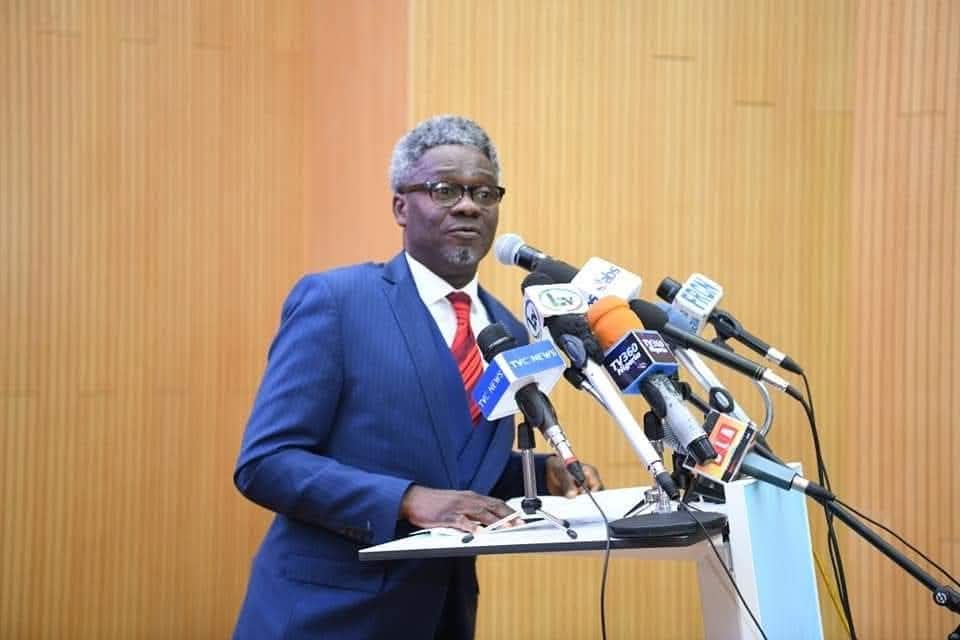
Add us on Google For over two years, I have been transitioning – by the grace of God, not in hospice; and certainly not in my sexual orientation, I remain a man, HIM, HE, and HIS, in cognition, courage and character. But I was transitioning as an employee of the Nigerian Communications Commission (NCC) and as a labourer in the vineyard of the Federal Government of Nigeria. After the close of business on 6th February 2026, I finally left the NCC, a denouement to more than 20 years of work with the Federal Government of Nigeria, which started with an appointment as special media advisor to Nigeria’s Minister of Information and National Orientation in 2005. More than 17 of those years were spent at the NCC, where I started as the frontline officer of the Commission with the National Assembly (Nigeria’s bicameral federal legislature), and in the final phase as Head of Online Media, Head of Media Relations, and exiting as a Deputy Director, a rung to substantive directorship. I am so delighted that my plan to leave mainstream public service before the mandatory retirement age has been realised. Earlier, I had made three unsuccessful attempts to leave, though my sojourn at NCC had been an interesting journey. I will recall a few anecdotes, but deeper reminiscences will come later to enrich my memoirs (if I have life and am able); otherwise, others will do it. My resumption at the Commission after scaling all examination hurdles (despite being headhunted) coincided with the birth anniversary of Ernest Ndukwe, the Executive Vice Chairman and CEO of NCC at the time I joined the Commission. It was on 2nd September 2008, and as I sent him a felicitation note via a regular SMS, he acknowledged and was thankful, wishing me well in my career at the telecom regulatory agency. Seven months later, at a retreat for middle-level staff, while giving a presentation, Ndukwe asked me to rise from my seat. He also ordered another lady, now a director at the Commission, to rise. He asserted that both of us were models who came into the Commission with a clear idea of what to do and a determination to add value, and we hit the ground running. I did not and still do not know what the lady did that impressed Ndukwe. Still, I came into NCC as the frontline liaison officer of the Commission with the National Assembly (NASS), where the 2008 budget of NCC was yet to scale legislative hurdles in the ninth month. By October, the month after my resumption, as I had promised Ndukwe, the budget was passed, and the Commission did not spend a dime to get it done. We shared meaning afresh with those who consciously shared intention, offered attention and saw purpose in berthing at a common ground. We leveraged goodwill. At the place I worked before joining NCC, I was a manager of media strategy and external relations. Still, I think Ndukwe was particularly fascinated by and eager to explore the non-media external relations aspect of my skill set, which explained his preference for me to ‘anchor’ NASS for NCC. It took Tony Ojobo’s arrival as Director of Public Affairs Department for me to move to my turf – media relations. I remember Ndukwe had told my boss, Dave Imoko, Ojobo’s predecessor, that I should give him (Ndukwe) hints about goings-on in NASS as they occurred, before he would receive detailed reports from me through my boss. NASS had become so central to NCC operations and objectively so, considering its role in the deregulation and liberalisation of the telecom industry in Nigeria. For free, I would say the Nigerian Communications Act (NCA) 2003 was a major legislative imprimatur on the Nigerian telecom reforms, and Ndukwe was always mindful. I think another reason Ndukwe took an interest in me was a blueprint I submitted shortly after I arrived at the Commission to justify the creation of the Legislative and Government Affairs Department. The Department, which became a unit of a broader Public Affairs Department in April 2010, had been a section of the Commission before I arrived, and it was my first port of duty. While government relations as a component of organisational structure was popular in the private sector, I doubt whether any Ministry, Department or Agency (MDA) of government had a clear structure in place as NCC envisioned and set up one. It would be my lot to prepare a framework that was not just strategic but also justified the creation of the department, as well as to ensure its activities are measurable and connect with the first-tier enterprise operations. My submission captured how NCC would relate to other MDAs, States, Local Governments, and non-state actors mainstreamed as stakeholders. The blueprint, which spoke to multi-stakeholderism and strategic engagements, was adopted with a slight modification by Ndukwe and set the tone for NCC’s relationship with the Governors Forum today. The benefits of that relationship can be gleaned from the Commission’s increasing collaboration with subnational entities on Right of Way issues and the implementation of the National Economic and Development and Peace Council’s decisions as they relate to the telecom industry in the broader context of the digital economy. Ndukwe was a leader, not infallible, but he could hold his own. Let me illustrate by recalling an incident. One day, Ndukwe rang my line and asked me to come to his office immediately. When I got to his office, he gave me two documents and said, “Niyi! Those candidates could not pass our exam. So, we cannot employ them. Tell our people to send us new candidates. We will consider them if they pass our exam and interviews.” Those he referred to as our people were the sponsors of those candidates, and their names were written on the respective documents I was directed to deliver. Ndukwe’s directive in this instance became so consequential in my thoughts and gave me hope that Nigeria may succeed. Nations rise and fall at the instance of leadership. One other leadership offering to recall at the Commission was that of Prof. Umar Garba Danbatta. Like Ndukwe, like all of us, Danbatta has his foibles, but he was a good leader, towering in intellect and management. Being a scholar, teacher, university administrator and even dean of students at Bayero University Kano (BUK) before he became EVC, Danbatta recognised that I was an activist. He too was one, after all, he was in Wroclaw, Poland, in the days of socialism, and he returned to Nigeria ‘radicalised’. ‘Marxist UG’ they called him at BUK, where he spent much of his life teaching and mentoring. He spoke so much about my activism when he presented my book to the public in July 2023. When I returned to the Commission in 2019 after my studies, I sent Danbatta two ‘revolutionary’ memoranda, and he summoned me to his office. He told me why he could not approve my submission as contained in the documents. “Dr Niyi, you are going to put me into trouble”, he stated, laughing as I stood before him. Then, he continued. “I get your point, and I know you are fighting for others since you are already done with your PhD, but we cannot sustain this policy if we start it as you have proposed.” He told me with avuncular intonation. “Noted, sir,, I responded. I would later learn that he had read those memoranda three times before he sent for me to discuss their content. The photograph accompanying this piece is deliberately chosen because it tells another story about Danbatta. It was taken at one of the events during the era when I was practically the official compere for key Commission events. This event took place at the NCC Annexe Office in the Mbora District of Abuja. I had been slated to emcee the event, but I suddenly had bouts of fever. I was so febrile and wanted to call in sick, but I remembered Danbatta’s words during a tete-a-tete after a stakeholder forum in Lagos the year before. As I held his hand to assist him in descending the stage after the event, he said to me: “Dr Niyi, I learn something new from you each time you compere events. I admire your versatility and how you connect the contexts.” It was those words that stopped me from calling in sick. I got out of bed, got ready, and proceeded to the event. The kind words of a leader can be an elixir. Danbatta gave me a psychological healing, even if momentary. I do not know what the verdict of history will be on my sojourn at NCC, but a journalist who seemed to have studied my life’s journey attempted a narration at the link below. The report was published in July last year by many media outlets, particularly in the Fifth Estate, when I was enlisted in the 2025 PR PowerList. Importantly, I am extraordinarily grateful to my Maker, The Almighty God, for the engracement. I am equally thankful to everyone, including external stakeholders that I met on that journey and who toiled very sincerely to make NCC a great brand. As Billy Ocean stated in his 1984 memorable musical rendition, SUDDENLY, “if I have to do it all again, I wouldn’t change a thing.” May Nigeria Succeed. Share this: Click to share on X (Opens in new window) X Click to share on Facebook (Opens in new window) Facebook Click to share on WhatsApp (Opens in new window) WhatsApp Click to share on Telegram (Opens in new window) Telegram Click to share on LinkedIn (Opens in new window) LinkedIn Click to email a link to a friend (Opens in new window) Email Click to print (Opens in new window) Print