Gaps in transparency, oversight, public participation weaken Nigeria’s debt accountability — Report
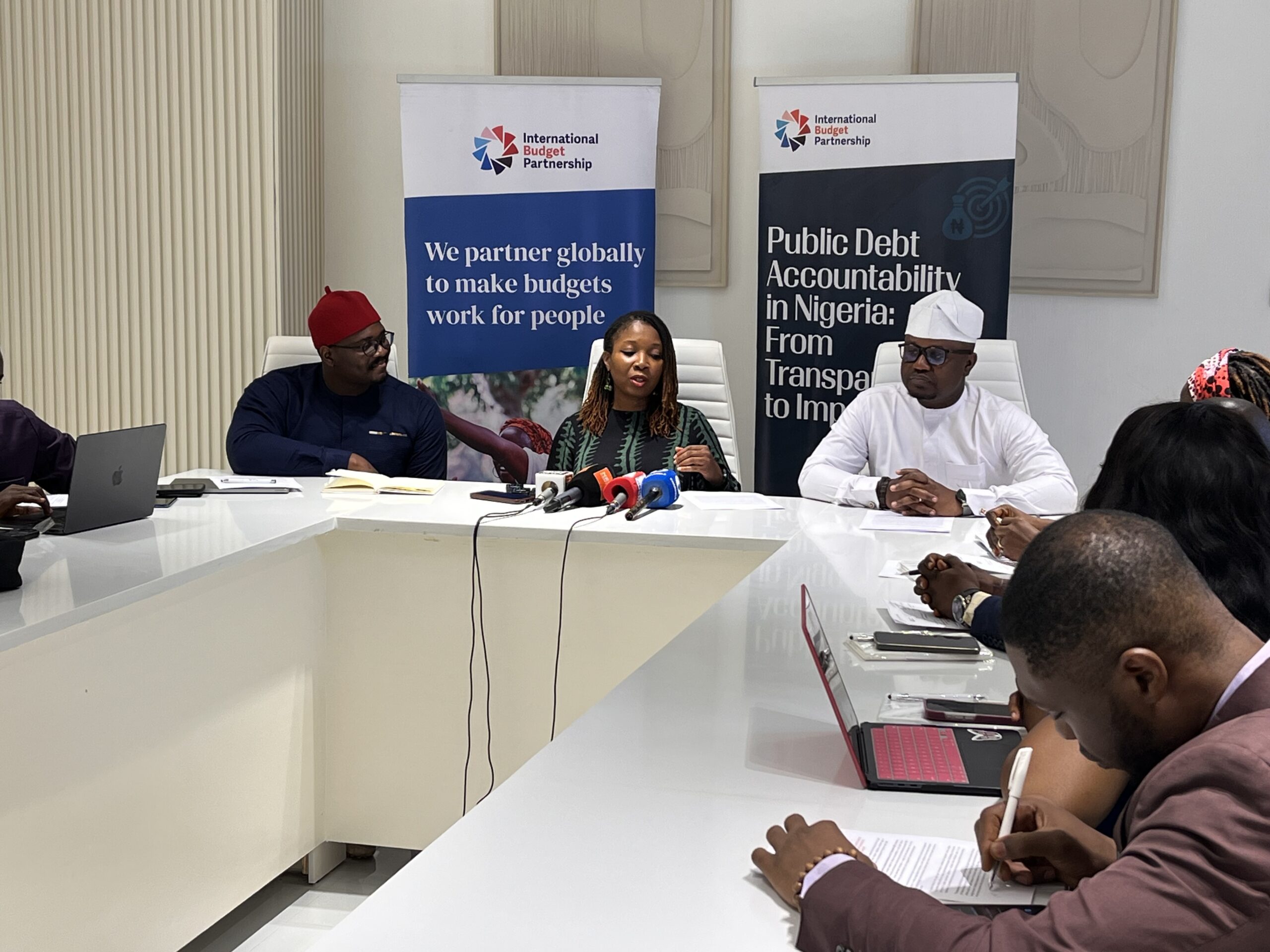
Add us on Google New findings by the International Budget Partnership (IBP) Nigeria have revealed that Nigeria’s public debt management system is constrained by persistent gaps in transparency, oversight and public participation, limiting effective accountability in how borrowing decisions are made and implemented. The findings contained in the 2025 Open Budget Survey (OBS) Debt Accountability Module, is a pilot extension of the global survey that examines how countries manage, disclose and account for public debt. IBP said while Nigeria has the basic legal and institutional frameworks for managing debt, gaps in how these systems function undermine accountability and public trust. Fragmented information Presenting the findings on Tuesday in Abuja, IBP Nigeria Country Director, Yinka Babalola, said debt information in Nigeria is available but scattered across multiple documents, making it difficult for citizens and analysts to track borrowing decisions. Ms Babalola said although data exists on borrowing plans, debt strategy and loan transactions, it is spread out and uneven in detail, limiting its usefulness for public scrutiny. “What this means is that while disclosure exists, it does not yet fully support accountability,” she said. ‘Borrowing driven by revenue gaps’ Ms Babalola added that borrowing is largely driven by revenue shortfalls. “The reason why you borrow is because you are not generating enough revenue to cover your expenditure,” she said. She explained that while the government may meet nominal revenue targets, overall revenues, particularly from oil and non-oil sources, have often underperformed. Ms Babalola also raised concerns about the efficiency of public spending, noting that it is not always clear whether borrowed funds are being used productively or linked to measurable outcomes. She added that weak investment outcomes limit economic growth and reduce the government’s ability to generate more revenue, creating a cycle of continued borrowing. Oversight weak in practice The report also found that oversight of public debt is stronger in law than in practice. While the National Assembly has the authority to approve borrowing and the Office of the Auditor-General is empowered to review debt-related transactions, there is limited publicly available evidence of detailed legislative scrutiny of debt strategy during the budget process. Oversight, the report noted, tends to focus on approvals rather than deeper examination of borrowing decisions, risks and implementation. Limited public participation On public participation, the report identified a major gap, noting the absence of structured opportunities for citizens, civil society and the media to engage on borrowing plans, debt levels and fiscal deficits before key decisions are finalised. This, the report revealed, limits the ability of the public to contribute meaningfully to decisions that shape the country’s fiscal future. Laying more emphasis, IBP Nigeria Senior Programme Coordinator, Onyekachi Chukwu, said lawmakers must do more to engage citizens on borrowing decisions. He noted that many elected representatives fail to return to their constituencies to consult citizens on issues that affect them, including public debt. “Beyond public hearings, it is an opportunity for constituency representatives to go back home and get the input of their constituents,” he said. Mr Chukwu added that public scepticism about borrowing is largely driven by the lack of visible results. “The issue is not in the borrowing, the issue is what you use it for,” he said, noting that citizens are more likely to support borrowing if its impact is clear. Accountability concerns IBP Senior Programme Coordinator, Iniobong Usen, said mechanisms that focus only on tracking project implementation without involving citizens in decision-making do not address the core accountability problem. “If citizens do not contribute to what is borrowed for, then it does not address the participation gap,” he said. Responding to concerns about debt repayment, Mr Usen said the government continues to service its loans, but at a significant cost. He noted that debt servicing has, at times, crowded out spending on critical sectors such as health and education. READ ALSO: #EndSARS: Lawyer writes Lagos police commissioner, demands payment of N10m judgement debt Recommendations To address these gaps, the organisation recommended reforms in three key areas; transparency, oversight and participation. It called for clearer and more consolidated disclosure of borrowing information, stronger legislative and audit scrutiny beyond formal approvals, and structured opportunities for citizen engagement in debt-related decisions. About the survey The Open Budget Survey is a global, independent assessment of budget transparency, oversight and public participation conducted every two years. The debt accountability module is a pilot extension of the survey, introduced to examine governance issues in public debt management, beyond just the size of debt. It focuses on whether borrowing decisions are transparent, properly overseen and open to public scrutiny. Share this: Click to share on X (Opens in new window) X Click to share on Facebook (Opens in new window) Facebook Click to share on WhatsApp (Opens in new window) WhatsApp Click to share on Telegram (Opens in new window) Telegram Click to share on LinkedIn (Opens in new window) LinkedIn Click to email a link to a friend (Opens in new window) Email Click to print (Opens in new window) Print