In Memoriam: Professor ObaFemi Omololu (1956–2026), By Kudus Adebayo
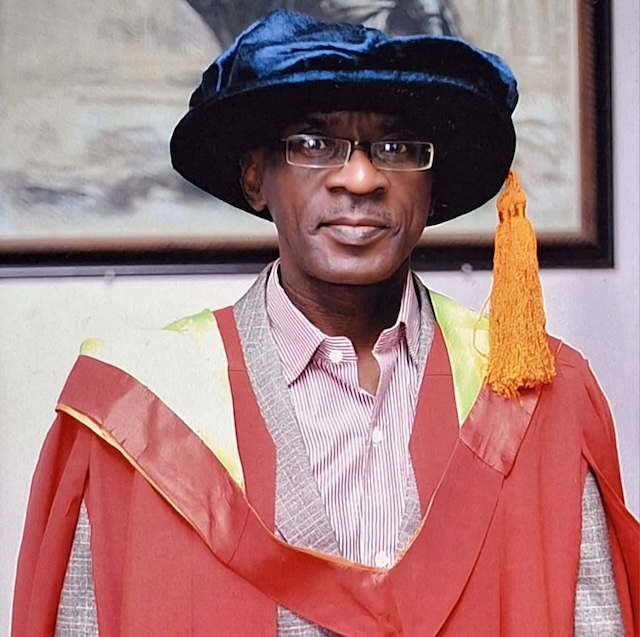
Add us on Google For many of us who were privileged to have been supervised by him, we learnt the value of paying it forward. Professor Omololu taught us not to give less to the students we will encounter, to be supportive and to carry them as far as our shoulders can permit. He helped many, far beyond his immediate sphere of influence. With seven deaths in six months, three in the current month of March alone, an entire campus mourns, queries the frequency, and a student recalls… “I pray you catch a wave That doesn’t subside This for the nappy heads in heaven With a nappy head Christ by their side …May your streets be paved with gold. … I hope you make it home.” (“Make It Home”, Tobe Nwigwe) I met Professor Olugboyega ObaFemi Omololu when I started my MSc project in the Department of Sociology at the University of Ibadan. Before that time, I knew him in class, in a way: he was our Sociological Theory and Social Policy and Planning lecturer. Before meeting him personally for my project supervision, I knew him as someone who tricked the entire class into listening and being attentive by asking his five “intelligent” students to raise their hands, or by sometimes declaring that he was working for only 10 students in the class, the 10 students who were curious and open to receiving new ideas. googletag.cmd.push(function() { googletag.display('div-gpt-ad-1672626398022-0'); }); One time, also in class, he invited all of us to pay attention to the changes happening around us, beating the drums of “diaspora is the next big thing” so strongly that I would later dedicate my doctoral research endeavour to exploring a diaspora issue. However, it was my MSc project that brought me close to him. Professor Olufunke Fayehun sent me to him because, according to her, he would like me, as we somehow think alike. So, I went to see him. My first experience of him was one of care and brightness. He asked what I was interested in and was patient enough to think it through with me. By the time I was done, he sat me down and encouraged me to go further. He told me I had the capacity to advance in research, to pursue a doctorate, and that I could be very good if I remained calm and committed. This was in late 2012. I wanted what he wanted for me, but I knew that my personal situation could not allow me to embark on doctoral research. But Professor Omololu called me on the phone, asking what business I had in Lagos and why I had not returned to continue my studies. I explained to him that I did not have the means to go on, but he was persistent and encouraging. He was so encouraging that I thought he had money waiting for me. But that was who Professor Omololu was – an unrepentant optimist and a confident believer. He calmed my anxiety all the way, ensuring that I was able to pay for my first year with the money he paid me from a field study I assisted him on. He opened his office to me and ensured that I made it a daytime home. Having such a space to work in helped me incredibly. That was not all. As an unmarried young man, he made me understand that food was my biggest problem, and he ensured that I got some money for this whenever he could. He was consistently generous. In that early PhD year, I was often fearful, wondering if I had not bitten off more than I could chew by choosing a research topic that would require me to collect data in China. Each time I raised my concerns, Professor Omololu would say confidently, “If your idea is good enough, you should get funding.” When I raised concerns about travelling to China for fieldwork, realising how naïve I had been to follow that path, my supervisor would simply say, “When we get to the river, we will cross it.” It was during that particular encounter that he reminded me that he was yet to see my proposal! Multiple grants and awards later, the rest was history. But I will never, ever forget all the things I learnt from my good Professor Omololu. He showed what tolerance means every day. He was a true believer, a Christian, who never allowed his personal beliefs to affect our professional and personal relationships. Of course, he sometimes joked that Jesus would arrest me one day, but every January when he supported the event that brought Pastor Adeboye to the campus, he left me to the comfort of the office chairs and table. Professor Omololu taught me how to write abstracts. I remember sitting opposite him in 2013 to review what I had written for submission for a conference at the Obafemi Awolowo Institute of Governance and Public Policy. That abstract was my first attempt at such a task. When we started, he said, “I don’t want to have to teach you how to write abstracts again.” There and then, I learnt from him how to slash words from abstracts without remorse. I started that academic dance early and brutally, all thanks to his intentional mentorship. He encouraged me to think for myself and took his time to show me how to think and engage in discourse. During short trips in his car or inside his office, conversations around public education, politics, and policy would come up. When the conversations got heated, he would pause to ask me one question: “Are you discussing this as an activist or as a scholar?” Even when I thought the two could go together, his probe to compartmentalise each one usually led me to pause and reflect on my discursive commitment. I also learnt from him what fairness looks like in practice, especially as an academic. He taught me how the mood affects grading and the need to guard against judging the next script by the previous ones. He often emphasised that every new grading must begin on a clean slate, that people think differently, and that this divergence must be reflected in how we assess students. As a teacher, my grading philosophy remains grounded in this idea. He was also a great supporter of my family, even before I started one. He helped me face my fears and embrace focus over doubt. He prayed for me every time, prayed for my wife, and loved my sons. He sent us a name this past December when our second son arrived. When I was confronted with serious ethical dilemmas, he sat me down, as always, and offered a realistic and pragmatic perspective. Professor Omololu was a committed father and husband, and he freely shared his experience when requested. For many of us who were privileged to have been supervised by him, we learnt the value of paying it forward. Professor Omololu taught us not to give less to the students we will encounter, to be supportive and to carry them as far as our shoulders can permit. He helped many, far beyond his immediate sphere of influence. Lastly, Professor Omololu made me believe in myself, in my capacity, in my voice as a thinker and an academic. And he did that at a time when I needed it the most. On this day, I salute a fine man, a real gentleman, an original Lagos Islander, a mentor, a builder, and a fair human being: my supervisor, Professor Olugboyega ObaFemi Omololu. May your path to the beyond be peaceful and beautiful. Rest on. Kudus Oluwatoyin Adebayo is with Diaspora and Transnational Studies, Institute of African Studies, University of Ibadan. Share this: Click to share on X (Opens in new window) X Click to share on Facebook (Opens in new window) Facebook Click to share on WhatsApp (Opens in new window) WhatsApp Click to share on Telegram (Opens in new window) Telegram Click to share on LinkedIn (Opens in new window) LinkedIn Click to email a link to a friend (Opens in new window) Email Click to print (Opens in new window) Print