Modern Slavery: Inside Nigerian communities where children are sold into marriage (II)
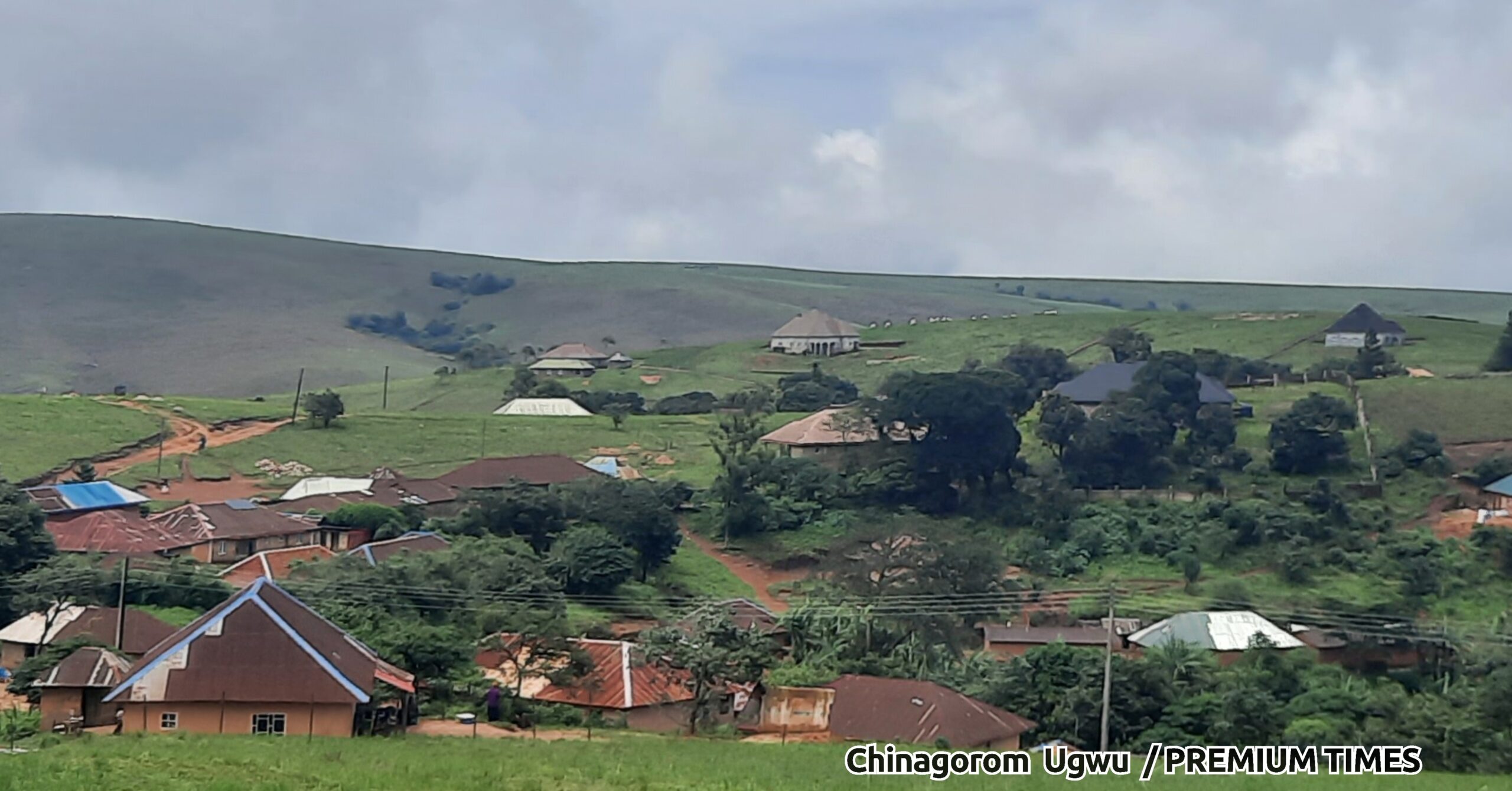
Add us on Google This is the second and final part of the two-part series. You can read the first part here. Becheve, a community in Obanliku Local Government Area of Cross River State, is not beautiful just because of its closeness to the famous Obudu Mountain Resort (formerly known as Obudu Cattle Ranch). A signpost along the road leading to Becheve From the frequent cool climate to its lush vegetation and adjoining mountains rising from the earth, Becheve’s beauty is not dramatic – it is calm, green and deeply soothing. Surrounding mountains in Becheve When a PREMIUM TIMES reporter visited the community in June, the peace therein was striking. There was a quiet rhythm to life in the community – birds calling from treetops, cattle grazing on lush vegetation, winds brushing through the leaves, and a soft mist wrapping around the mountains like a white shawl, slowly lifting as the sun rose. Cattle grazing on lush vegetation in Becheve But the beautiful environment and soothing weather stand in sharp contrast to a cruel and illegal ancient customary practice in the community called money marriage. Underage girls and those yet to be born are sold into marriage in exchange for money or goats, food items, or just anything, in settlement of their parents’ debts. A section of Becheve Community The person taking the loan or the items would enter into a covenant with the intending groom by way of oath-taking. Generations of underage girls in the community have been used as “collateral” for loans or payment for debts in Becheve. While the practice is called money marriage, the bride is known as “money wife” or “money woman.” But those who tag it “modern slavery” aren’t wrong. Florence Keji was only eight when she was sold off as a bride. The man, now late, was about 70. Mrs Keji had no idea she was married to him until she was about 14. That was about the time the man, whom she thought was her grandfather, began to sexually abuse her. The abuse resulted in her first pregnancy and childbirth at 15. Florence Keji She would later learn that she was “given” to the man as a money wife because her parents took a loan from him while her mother was sick and needed urgent medical treatment. “My people told me they collected a loan from him. But when they could not repay him, they offered me to him as a money wife to repay the debt,” Mrs Keji, now 40, narrated in Pidgin English. Unable to bear the brunt of the forced marriage and occasional abuse by her husband, she ran back to her father’s house while heavily pregnant. Her mother was already late by then. Her uncles and other relatives shocked her: They beat her up and forcefully returned her to her husband, accusing her of attempting to violate the community’s ancient custom. “I was heartbroken,” she said, struggling to hold back tears. “Money marriage is still ongoing now. But I’ll never allow my daughters to go through it.” PREMIUM TIMES findings showed that families in Becheve also take loans, which could be money, cattle or food items, even before couples give birth to a female child, based on the agreement that such loans would be repaid with a child bride. “If the couple gives birth and it turns out to be a male, then the man would wait until a female child is born,” an elderly woman, who asked not to be named, told this newspaper. No one can ascertain when the customary practice began in Becheve. Unlike Mrs Keji, whose union was for the repayment of her mother’s debt, Blessing Otina’s marriage at the age of nine was arranged after her maternal uncle presented her as collateral for a loan he took to resolve a personal problem. Mrs Otina’s husband had a wife already at the time. “My maternal uncle approached my mother and requested that he use me as a money wife to collect the loan from the man. My mother agreed, and I became the man’s second wife,” Mrs Otina said in Pidgin English. The mother of seven gave birth to her first child at 15. Blessing Otina Her husband died in 2024 at 70. Mrs Otina said she was lucky that her husband was not abusive like others, but regrets that the union blocked her access to education. “Not all money women are lucky to get a good husband. Some of them go through untold hardship. They even find it difficult to eat, especially after their husbands get older and are unable to provide,” she remarked. Queen Onoale was also nine years old when she was given out to her husband as a bride. Her husband was about 50 at the time. “My grandfather was having a problem and was in need of money. It was not easy to get money. So, he went and borrowed money from the man, and they decided that they would give me (to the man,” Mrs Onoale, now 28, narrated. Queen Onoale Initially, she was full of joy that her husband did not stop her education. “I was dreaming of becoming a banker in the future (after my education),” she recalled. Her joy was short-lived: Her husband later forced her to drop out in JSS1 to face marital responsibilities. Mrs Onoale’s uncle protested and threatened to dissolve the marriage. But the family’s hands were tied by the ancient custom. “According to the custom, once they have given someone out as a money wife and your family wishes to end it but the man refuses to accept it, they (husbands) have an item (like symbol of the covenant between the bride’s parents and the groom) that if they separate it, the money woman will automatically die,” she stated, stressing that fear has forced many remain in their unions. The mother of five was asked if any woman had ever died in the community for violating the covenant. “No, because no one has tried to do that,” she responded. Meanwhile, Mrs Onoale dropping out of school sheds light on how child marriage contributes to the rising number of out-of-school children in Cross River. Data showing % and no. of out-of-school children in Cross River and other states The state has 1.12 million (7.6 per cent) children aged 6 to 15 years out of school. Nearly 24 per cent of girls in Cross River are married before the age of 18, becoming the second state after Bayelsa (38.1 per cent) with the highest child marriage incidence in the South-south. Data showing % of women aged 20 to 49 who married before 18 in Cross River and other states (Source: NBS and UNICEF) The state domesticated the Child Rights Act 2003 in 2009 and, in 2023, amended it into the Cross River Child Rights Law 2023. Health implications Like many underage mothers who spoke to PREMIUM TIMES in Ebonyi and Cross River, Mrs Onoale nearly lost her life when she gave birth to her first child at the age of 15. She suffered severe complications during delivery. “The doctor said (I had complications) because I was still too young to give birth. It was by the Grace of God that I survived,” she recalled. Underage girls face increased risk of severe complications and even death during childbirth, especially those below age 18, Anthony Ogbunwa, a gynaecologist, told PREMIUM TIMES. “This is because at that age, their pelvis is not mature and wide enough to allow the smooth passage of a baby. Unfortunately, the baby in the womb does not know the age of the mother and will, therefore, grow big the way the baby is supposed to be,” Mr Ogbunwa, who works at the Enugu State University Teaching Hospital, explained. Anthony Ogbunwa, a gynaecologist The gynaecologist further clarified that underage mothers are likely to experience “obstructed and prolonged labour,” which could make childbirth difficult, in addition to putting their lives at risk. He said aside from possible death and infertility, underage mothers face a high risk of suffering Vesicovaginal fistula (VVF), a childbirth injury which causes uncontrollable and constant leakage of urine or faeces. Underage girls, Mr Ogbunwa explained, can also suffer Recto Vaginal Fistula (RVF) during childbirth, stressing that both VVF and RVF are defects that arise mainly as a result of an underdeveloped body incapable of bearing the rigorous strains of childbirth. “Some of them can also develop Pelvic diastasis, which makes the pelvis swell, and the mother is unable to walk. Others can suffer from foot drop, causing the mother not to walk properly because the nerves were affected,” the gynaecologist added. Pride in evil Emelda Akor was barely 15 when she got seriously sick. But her parents could not afford her treatment. To save her life, the parents offered her as a bride to a man willing to provide the money. Emelda Akor Mrs Akor, now 35, moved in with the man upon being discharged from the hospital. There were no rites to formalise the union; they still live together and are referred to as a couple nonetheless. The immediate impact of her marriage was dropping out of school, even before she first gave birth at almost 16. “Here, immediately they (parents or relatives) give you out as a bride, you can’t go to school again. You will just stay in the house,” the mother of five said. Data showing % and no. of out-of-school children in Ebonyi and other states Apart from being a customary practice, taking women as money wives is a source of pride and a mark of social status for men in Becheve, investigations by PREMIUM TIMES showed. Families often pressure their sons to take girls as wives to raise their family’s name and social status. “Here, men brag about how many money wives they have in their houses,” a resident, who asked not to be named, said. Battle against practice Money marriage, which has been a common practice in the community, began to wane around 2021, after Her Voice Foundation (HVF) and other organisations began vigorously campaigning against it. Nonetheless, the practice continues discreetly in the community, PREMIUM TIMES investigation showed. HVF is a non-governmental organisation advocating against money marriage and other harmful cultural practices in Cross River. Sunday Ichile, a traditional ruler in Becheve, was unavailable when a PREMIUM TIMES visited his residence on 12 June. As of the time of filing this report, Mr Ichile’s mobile line was unreachable. He and other traditional rulers in the community had repeatedly claimed that the customary practice had stopped after it was reportedly banned in 2020. But, as earlier stated, a PREMIUM TIMES investigation showed that the practice has persisted in the community, albeit discreetly. In late 2024, for instance, Mr Ichile told Christian Science Monitor, an online newspaper, that organisations like HVF have guided the community to ban the money marriage tradition. He, however, confessed: “(But) traditions take long time to die.” “Money marriage is still happening here (Becheve), but no longer done openly like before,” a resident of the community, who asked not to be named, told PREMIUM TIMES in mid-February. Janet Ilu, an official of HVF, told PREMIUM TIMES that the organisation began its campaign against the practice by organising town hall meetings and dialogue sessions with community members and leaders. HVF logo Mrs Ilu, the director of scholarship at HVF, recounted one of the money-marriage cases encountered by the organisation in Becheve, in which a woman, Christiantia Eji, was given to her late husband’s son. “But the son was a very young boy like Christiantia. So he could not marry her. So, she’s just there now as a family property because the boy later married his preferred woman,” she said. “She can go out, sleep with men, and bring the pregnancy to the family. Once you’re given out as a money woman, any child you give birth to, whether you travel abroad, belongs to the man and his family – even after his death.” Mrs Ilu said HVF had conducted training sessions and empowerment programmes for hundreds of money-marriage brides in the community to reverse the trend. “We are also working on providing adult education to them (money marriage brides) in the ranch (Becheve), where we will help the girls to also become literate because most of them cannot spell their names,” she said. The Commissioner for Women Affairs in Cross River State, Edema Irom, did not respond to multiple calls and a text message seeking to know ongoing or planned efforts by the state government to stop the practice. This is the second and final part of the two-part series. You can read the first part here. This investigation was completed with the support of the Centre for Journalism Innovation and Development (CJID) Share this: Click to share on X (Opens in new window) X Click to share on Facebook (Opens in new window) Facebook Click to share on WhatsApp (Opens in new window) WhatsApp Click to share on Telegram (Opens in new window) Telegram Click to share on LinkedIn (Opens in new window) LinkedIn Click to email a link to a friend (Opens in new window) Email Click to print (Opens in new window) Print