Nigeria’s Electoral Act 2026: What Really Changed, and What Didn’t
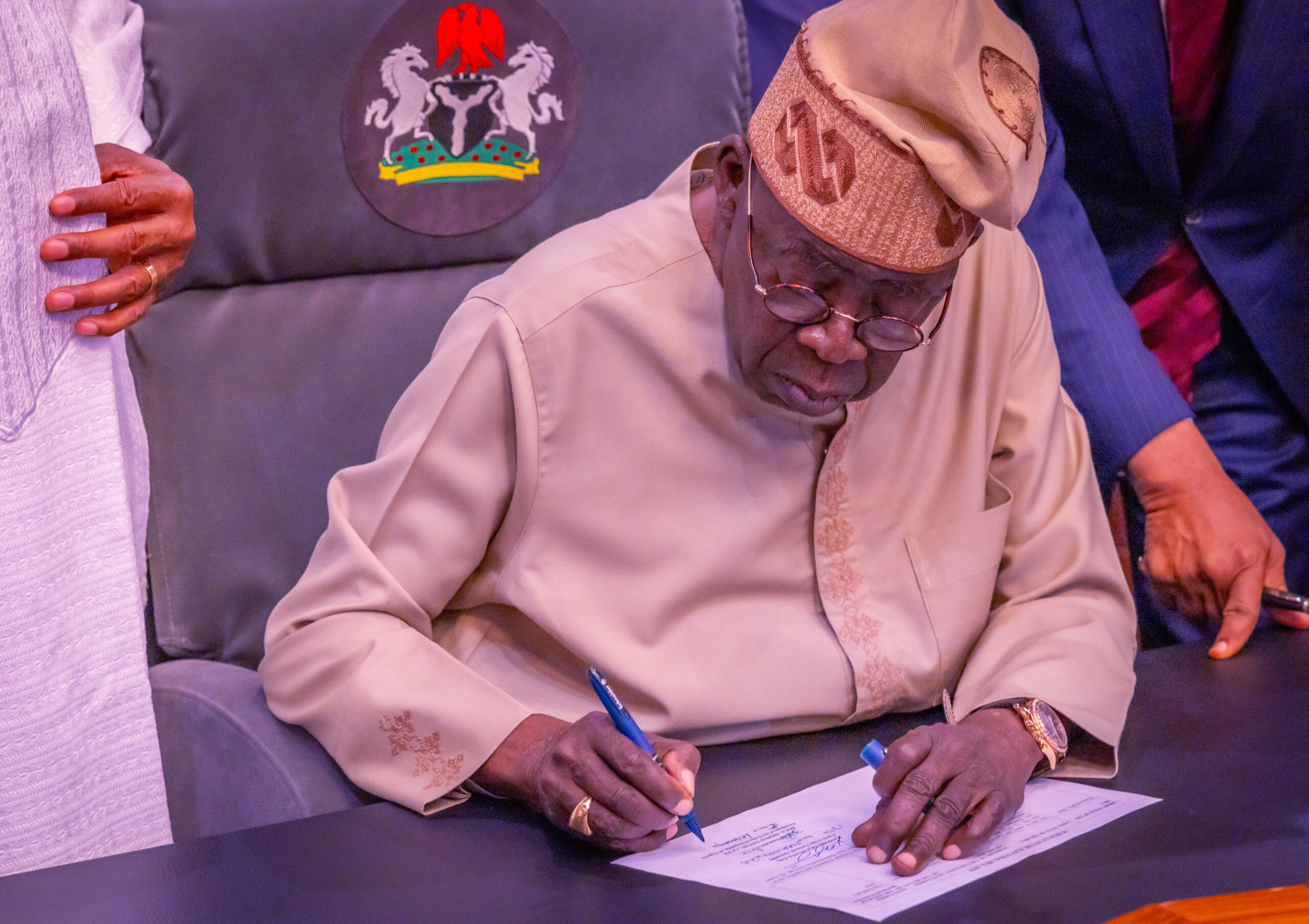
On 18 February, President Bola Tinubu signed the Electoral Bill 2026 into law. This has been a bruising few weeks: sustained protests outside the National Assembly, a disputed voice vote in the House of Representatives in which the ‘nays’ were audibly louder yet the Speaker ruled otherwise, teargas fired at peaceful protesters, and a joint conference committee that quietly adopted the weaker of two available positions. Now it is done. The president had the constitutional power to send it back. He chose not to. That choice belongs to him now, and so does whatever it produces in 2027. It would be dishonest to describe this law as entirely without merit. Some provisions represent genuine progress. But an electoral law is only as strong as its weakest clause, and this one contains several that deserve scrutiny, not as post-mortems, but as the basis for what Nigerians must do next. Allowing voters to download their Permanent Voter Card directly from INEC’s website is a meaningful win. In 2023, millions of PVCs went uncollected because the physical collection process failed, wrong centres, inadequate notice, and avoidable chaos. Digital access removes a real barrier. If you registered, you should be able to vote. This provision makes it more likely. The law reduces the timeline for releasing election funds to INEC from 12 months to 6. Before the 2022 Act, INEC had no guaranteed timeline at all and approached the executive cap-in-hand each cycle. For the 2023 elections, INEC requested N305 billion; the government’s opening offer was N100 billion. Halving the planning window reduces INEC’s leverage to resist underfunding and its buffer against late disbursements. Kenya and South Africa both operate under dedicated electoral funds with multi-year planning horizons and no executive discretion over timing. Nigeria has moved in the opposite direction. Civil society must track every disbursement to INEC publicly from this point forward. If the Executive uses the shortened window to starve the commission, that pattern must be documented and challenged. The law removes the National ID Card and Driver’s Licence from the accepted documents for voter registration. No official justification was offered, not in the explanatory memorandum, not in committee reports, not on the floor. These are among the most widely held forms of government-issued identification in Nigeria, particularly among older, rural, and working-class Nigerians. Nigeria has narrowed access without explanation. Civil society must commission an independent impact assessment of how many Nigerians this affects, and if the numbers confirm my expectations, this provision must be litigated. The e-transmission clause is where the law fails most consequentially. The technology had been proven to work: in the 105 off-cycle elections before 2023, including five governorship races, electronic transmission functioned without catastrophic failure. What failed in 2023 was not the technology. It was the institution. Thirty-six hours after polls closed, INEC had uploaded only 31.8% of presidential results. A substantial number took nearly a week. In Lagos, Rivers, Kogi, and several northern states, figures announced at collation centres differed significantly from those recorded by BVAS at polling units. INEC offered no accounting. The Supreme Court made the legal situation explicit: IReV is a viewing portal, not a legal collation system. Data uploaded to it carries no legal weight over manually collated figures. You could watch your candidate win on IReV. You could still lose in court. The Electoral Act 2026 makes electronic transmission to IReV compulsory, a genuine step and product of years of civic pressure. But if transmission ‘fails,’ the physical Form EC8A takes over. The law does not define failure. It does not establish who independently certifies it. It imposes no consequence on officials who declare or engineer it. Kenya’s electoral commission is legally mandated to test and certify its transmission infrastructure at least 60 days before any election, with electronic results forming part of the official legal record. Nigeria’s law mandates transmission without protecting its legal integrity. Who decides when transmission has ‘failed’? If the answer is INEC, the institution that offered no explanation for the 2023 delays, then the institutional discretion that made 2023 possible remains intact. The arena has changed. The risk has not. Three things must now happen. INEC must be pressured to publish binding internal protocols that define transmission failure and specify who has authority to invoke the EC8A fallback and on what documented basis. Every Nigerian voter must understand that protecting their vote does not end at the polling unit; it extends to the collation centre, and they must be present, vigilant, and ready to document any invocation of that fallback in real time. And the legal groundwork for a post-election challenge must begin now, while the arguments are fresh and the evidence of legislative intent is on the record. This law was not inevitable. It was chosen. The Speaker who ruled the ‘ayes’ had it when the Chamber said otherwise. The lawmakers who stayed silent. The Conference Committee adopted the weaker position. The President who signed without amendment. Every one of them made a choice, and every one of those choices is now on the record. The ruling party controls 31 of Nigeria’s 36 state governorships. Senior lawmakers who have benefited from historically opaque processes are writing the rules for 2027. A President who signs these arrangements is not simply enacting legislation. He is endorsing them. READ ALSO: UPDATED: Tinubu signs Electoral Act Amendment Bill 2026 into law, commends lawmakers for preventing potential hacking For citizens, the task is to remain engaged beyond Abuja. The National Assembly members who adopted the fallback clause represent constituencies across this country. Those constituencies should know what their representatives agreed to. Democratic accountability does not wait for election day. It begins now, in constituency offices, town halls, and the communities that sent these lawmakers to Abuja in the first place. The Electoral Act 2026 is the law. It contains real improvements. It contains dangerous loopholes. It represents a moment when the legislature and the executive, faced with a clear democratic demand, chose a lesser answer. The work of holding them to account for that choice starts today. Akindeji Aromaye is a Senior Media Associate at EiE Nigeria, passionate about citizen engagement, governance, and local government accountability. Share this: Click to share on X (Opens in new window) X Click to share on Facebook (Opens in new window) Facebook Click to share on WhatsApp (Opens in new window) WhatsApp Click to share on Telegram (Opens in new window) Telegram Click to share on LinkedIn (Opens in new window) LinkedIn Click to email a link to a friend (Opens in new window) Email Click to print (Opens in new window) Print