Nine years on, Nigerian Army defies court orders to reinstate 38 illegally dismissed officers
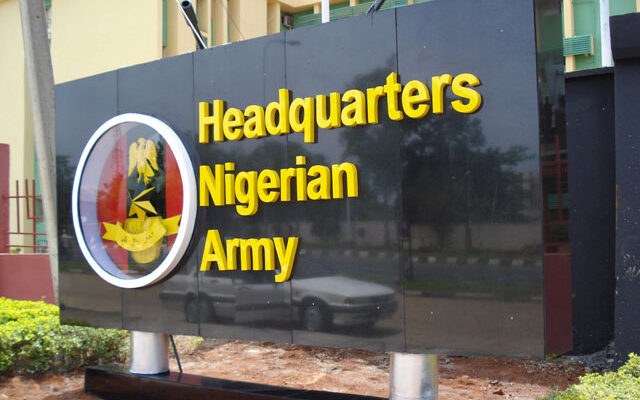
Add us on Google Nine years after their arbitrary dismissal, 38 senior Nigerian Army officers, including major generals, brigadier generals, colonels and lieutenant colonels, remain on the margins, their lives upended and their dignity denied, as the Nigerian Army continues to defy court orders directing their reinstatement. The officers, compulsorily retired on 9 June 2016, have taken every legal and institutional avenue open to them: they have won favourable judgments at the National Industrial Court, secured resolutions from both chambers of the National Assembly, engaged human rights lawyers, and written directly to two successive presidents. Nothing has worked. One of them, Ojebo Ochankpa, died in 2017 — still waiting for justice. His family later said he died “of a broken heart.” Associates of the late officer told PREMIUM TIMES that his widow, Ruth Baba-Ochankpa, and their three children, Joshua, Esther and Abigail, became living reminders of how institutional cruelty can destroy families as easily as it destroys careers. The 2016 Mass Dismissal In June 2016, the Nigerian Army compulsorily retired the 38 officers, citing “service exigencies, corruption in arms procurement, and partisanship” as grounds for what it described as “serious offences.” Stay Ahead with Premium Times Follow us on Google News and never miss breaking stories, investigations, and in-depth reporting. Add as a preferred source on Google /* 1. Wrapper & Container / .gn-wrapper { width: 100%; padding: 20px 0; display: flex; justify-content: center; } .gn-card { width: 100%; max-width: 600px; background: #ffffff; padding: 28px; border-radius: 16px; border: 1px solid #e0e0e0; box-shadow: 0 4px 12px rgba(0,0,0,0.08); font-family: 'Segoe UI', Roboto, Helvetica, Arial, sans-serif; } / 2. Header & Premium Times Logo / .gn-header { display: flex; align-items: center; gap: 14px; margin-bottom: 16px; } .gn-logo { height: 36px; / Slightly larger to balance the new text sizes / width: auto; object-fit: contain; } .gn-title { font-size: 22px; margin: 0; color: #1a1a1a; font-weight: 800; } / 3. The Bold Description / .gn-description { font-size: 18px; / Larger size / font-weight: 600; / Bolder weight / color: #202124; / Darker for readability / margin: 0 0 24px 0; line-height: 1.5; } / 4. The High-Impact Button / .gn-button { display: inline-flex; align-items: center; gap: 12px; padding: 14px 24px; border: 1px solid #dadce0; border-radius: 30px; / Modern pill shape / text-decoration: none; background: #ffffff; color: #3c4043; transition: all 0.2s ease-in-out; box-shadow: 0 1px 2px rgba(60,64,67,0.1); } .gn-button-text { font-size: 17px; / Increased font size / font-weight: 700; / Maximum boldness / letter-spacing: 0.1px; } .gn-button:hover { background: #f8f9fa; border-color: #d2d2d2; box-shadow: 0 2px 4px rgba(60,64,67,0.2); transform: translateY(-1px); } .gn-icon { width: 22px; / Matched to larger text size / height: 22px; object-fit: contain; } / 5. 📱 Mobile Optimization / @media (max-width: 480px) { .gn-card { padding: 20px; } .gn-header { flex-direction: column; align-items: flex-start; gap: 10px; } .gn-title { font-size: 20px; } .gn-description { font-size: 16px; } .gn-button { width: 100%; justify-content: center; box-sizing: border-box; padding: 14px 10px; } .gn-button-text { font-size: 15px; / Scaled slightly for small screens / } } The mass exit affected nine major generals, 11 brigadier generals, seven colonels and 11 lieutenant colonels. Investigations by PREMIUM TIMES, however, show the authorities acted outside the law. None of the affected officers was charged before a court martial or found guilty of any offence under the extant rules and regulations of the Armed Forces of Nigeria. Most were neither queried nor indicted by any panel. Some were on official national assignments abroad when they learnt through the media that they had been dismissed. One of the dismissed officers said he was never found guilty of corruption in arms procurement or any form of electoral partisanship. “I was never involved in any of the issues highlighted and/or any wrongdoing whatsoever. My compulsory retirement was without due process, as it was a clear departure from the disciplinary process and laid-down procedures of the Armed Forces of Nigeria, as well as natural justice,” he wrote in a letter to President Bola Tinubu. Danladi Hassan, a colonel and one of the 38 officers, had in 2014 led troops to reclaim villages in Borno from Boko Haram insurgents. Commissioned in September 1994, he had participated in several foreign missions, including ECOMOG operations in Liberia and Sierra Leone, as well as the United Nations Mission in Sudan. Like his colleagues, he received no query, no panel indictment and no court martial before being dismissed. Among those affected were a Director of Military Intelligence, defence attachés and officers who had served on the frontlines against Boko Haram. Some had received commendations for gallantry in the face of the enemy. Legal Violations PREMIUM TIMES’ review of the relevant statutes reveals that the army violated its own rules in the manner in which the officers were disengaged. The Harmonised Terms and Conditions of Service for Officers, specifically paragraph 09.02c(4), was cited to remove the officers. That provision allows for compulsory retirement “on disciplinary grounds, i.e. serious offences,” but does not define what constitutes “serious offences.” More critically, the principal law — the Armed Forces Act — establishes all actions that constitute offences in the military and prescribes the procedures for punishing offenders. A review of the Act shows no provision empowers the Army Council to arbitrarily punish or compulsorily retire officers for any offence. Section 11(a-f) of the Act, which governs the powers of the Army Council, does not include the authority to retire any officer on disciplinary grounds without compliance with the legally prescribed steps. The officers petitioned military authorities in keeping with military rules immediately after their dismissal. Their statutory appeal for redress, which ought to have been acknowledged within 30 days, was neither acknowledged nor replied to, according to documents seen by PREMIUM TIMES. Courts rule in Favour of Officers. The Court of Appeal ruled in favour of one of the officers, Danladi Hassan, declaring his dismissal “unfair, wrongful, unlawful, illegal, unconstitutional, invalid and contrary to the Armed Forces of Nigeria Harmonised Terms and Conditions of Service for Officers 2012.” The appellate court also directed his immediate reinstatement with effect from 9 June 2016. Similarly, seven of the dismissed officers — Major-General Ijioma Ijioma, Brigadier-General Abubakar Sa’ad, Colonel Muhammed Suleiman, and Lieutenant Colonels Dukip Dazang, Thomas Arigbe, Abdulfatai Muhammed and Abubakar Mohammed — filed suits at the National Industrial Court. Ruling in their favour between 2019 and 2021, the court declared their compulsory retirement illegal and ordered their immediate reinstatement with full rights, privileges, and outstanding salaries and allowances. The judgments were not challenged at the Court of Appeal. Yet the Nigerian Army refused to comply. Mr Mohammed filed his suit at the National Industrial Court to reverse what he described as his “unlawful and wrongful compulsory retirement.” On 14 January 2020, the court declared his retirement “wrongful, unconstitutional, illegal, null and void” and ordered his “immediate reinstatement with all the rights and privileges.” The army has yet to act on the judgment. In a subsequent letter to the Chief of Army Staff, Mr Mohammed noted that “despite the favourable judgment of the court in 2020 to redress the injustices meted out to me, the pattern of abuse that I have been subjected to since 2016 was continued with the deliberate neglect to comply with the court judgment which was duly served [on] the Nigerian Army.” PREMIUM TIMES understands that a former Chief of Defence Staff, Lucky Irabor, attempted to resolve the matter in 2021. In a memo acknowledged on 7 July 2021, Mr Irabor sought ministerial endorsement for the “voluntary retirement of the 38 senior officers with effect from 1 January 2018.” The proposal was not approved. Two other officers, Chidi Ukoha and Osita Nwankwo, approached the Senate and House of Representatives separately. Both chambers investigated their petitions independently, found no basis for their compulsory retirement, and recommended their reinstatement. The Nigerian Army ignored both legislative resolutions. Falana writes to the Attorney-General Human rights lawyer Femi Falana, a Senior Advocate of Nigeria, has taken up the officers’ cause, writing on their behalf to the Attorney-General of the Federation and Minister of Justice, Lateef Fagbemi. In the letter seen by PREMIUM TIMES, Falana and Falana Chambers stated that the then-Minister of Defence and Chief of Army Staff had alleged in the media, “without any basis,” that the officers were professionally corrupt and had been punished after due process. “Contrary to the libellous statement of both highly placed public officers, our clients were never accused nor tried for corruption or any other offence whatsoever,” the law firm wrote. The firm urged President Tinubu to direct the Nigerian Army to implement the judgments of the National Industrial Court and the Court of Appeal, as well as the resolutions of the National Assembly. It specifically demanded the immediate reinstatement of all listed officers with effect from June 2016, their restoration to the current rank and seniority of their coursemates, and the full payment of salaries and emoluments from June 2016 to date. President Bola Ahmed Tinubu Appeal to President Tinubu PREMIUM TIMES reported that some of the officers submitted a separate letter to President Tinubu’s office, urging the president to compel the army to obey the court orders. Invoking his “avowed commitment to justice” as expressed in his inauguration speech, the officers described their compulsory retirement as a “malicious and wrongful” action compounded by “reputational damage actions in the media.” The officers made three demands: immediate reinstatement with effect from 9 June 2016; full restoration to the current rank and seniority of their coursemates in the 47 Regular Course; and payment of all salaries and emoluments from June 2016 to date. “I am confident in your leadership and steadfastness for justice and the rule of law, and optimistic that you will grant me full restoration to put my career back on course, as I never deserved the ill-treatment of over seven years of compulsory retirement that was meted out to me,” one of the letters read. Sources within the military said only the president, as commander-in-chief of the armed forces, has the authority to overturn the decision and order reinstatement. Who Can Act and Who Has Not The pathways to resolution are clear. The Chief of Army Staff, Waidi Shuaibu, has the authority to reinstate the officers on the strength of the court orders and to advise the president accordingly. Notably, Mr Shuaibu is a coursemate of dismissed officer Danladi Hassan. On assuming office, the army chief pledged to uphold justice. Mr Shuaibu’s predecessors — Tukur Buratai, Attahiru Mohammed, Farouk Yahaya, Taoreed Lagbaja and Olufemi Oluyede — all refused to obey the court orders. The Minister of Defence, Christopher Musa, chairs the Army Council — the same body that recently approved the promotion of generals and major generals. The council could, by the same authority, order the reinstatement of the dismissed officers in compliance with the court judgments. The Attorney-General of the Federation is also constitutionally empowered to advise the president on matters of justice. PREMIUM TIMES sent Freedom of Information requests to the Chief of Army Staff, the Minister of Justice and the Attorney-General, seeking the status of the case and an explanation for the continued non-compliance with the court orders. None of them responded to our requests. A military officer, who spoke on condition of anonymity, offered a pointed observation: “There’s no statute of limitations on injustice. As the president is trying to recruit more personnel for the army, the best time to look inward is for justice to begin within the army itself.” Meanwhile, some of the officers who once fought Boko Haram on the frontlines are now struggling to provide for their families — the price of a dismissal the courts have since declared illegal, and a justice system that powerful institutions continue to ignore. READ ALSO: 12 Years After, Chibok Girls at AUN Remember Sisters in Captivity One of the officers noted that the weight of this injustice has caused “untold emotional and psychological pain to these victimised officers. It has shaken their faith in the system they once proudly served and defended.” Some of the officers, despite court orders directing their reinstatement, are no longer keen to return to active service after nine years of seeking justice. Some say they would settle for closure — a voluntary retirement at the current rank of their coursemates. In his book, “Nigerian Real: An Armchair Critic’s Perspective,” Abdullateef Mohammed reflected on the story of the Army 38, describing it as one of the most shameful episodes in the history of the Nigerian Army. “It is a story of betrayal within the ranks, of arrogance in leadership, and of a system that quietly devoured its own loyal servants. It is also the story of how institutions collapse when leaders abandon due process and hide behind power,” he wrote. The author noted that President Tinubu has a chance to break this chain of impunity. “He can begin by ordering the immediate implementation of the Court of Appeal and other related cases. The officers should be reinstated, their ranks and seniority restored, and all arrears of salary and benefits paid from June 2016 to date.” “The case of Army 38 is not just about the military. “It is about Nigeria itself. It shows how institutions that once stood for honour can descend into private fiefdoms when leadership loses sight of fairness. It shows how silence from the top can empower wrongdoing at every level. It also reminds us that every act of impunity leaves a record, and that record will someday be judged.” Share this: Click to share on X (Opens in new window) X Click to share on Facebook (Opens in new window) Facebook Click to share on WhatsApp (Opens in new window) WhatsApp Click to share on Telegram (Opens in new window) Telegram Click to share on LinkedIn (Opens in new window) LinkedIn Click to email a link to a friend (Opens in new window) Email Click to print (Opens in new window) Print Stay Ahead with Premium Times Follow us on Google News and never miss breaking stories, investigations, and in-depth reporting. Add as a preferred source on Google / 1. Wrapper & Container / .gn-wrapper { width: 100%; padding: 20px 0; display: flex; justify-content: center; } .gn-card { width: 100%; max-width: 600px; background: #ffffff; padding: 28px; border-radius: 16px; border: 1px solid #e0e0e0; box-shadow: 0 4px 12px rgba(0,0,0,0.08); font-family: 'Segoe UI', Roboto, Helvetica, Arial, sans-serif; } / 2. Header & Premium Times Logo / .gn-header { display: flex; align-items: center; gap: 14px; margin-bottom: 16px; } .gn-logo { height: 36px; / Slightly larger to balance the new text sizes / width: auto; object-fit: contain; } .gn-title { font-size: 22px; margin: 0; color: #1a1a1a; font-weight: 800; } / 3. The Bold Description / .gn-description { font-size: 18px; / Larger size / font-weight: 600; / Bolder weight / color: #202124; / Darker for readability / margin: 0 0 24px 0; line-height: 1.5; } / 4. The High-Impact Button / .gn-button { display: inline-flex; align-items: center; gap: 12px; padding: 14px 24px; border: 1px solid #dadce0; border-radius: 30px; / Modern pill shape / text-decoration: none; background: #ffffff; color: #3c4043; transition: all 0.2s ease-in-out; box-shadow: 0 1px 2px rgba(60,64,67,0.1); } .gn-button-text { font-size: 17px; / Increased font size / font-weight: 700; / Maximum boldness / letter-spacing: 0.1px; } .gn-button:hover { background: #f8f9fa; border-color: #d2d2d2; box-shadow: 0 2px 4px rgba(60,64,67,0.2); transform: translateY(-1px); } .gn-icon { width: 22px; / Matched to larger text size / height: 22px; object-fit: contain; } / 5. 📱 Mobile Optimization / @media (max-width: 480px) { .gn-card { padding: 20px; } .gn-header { flex-direction: column; align-items: flex-start; gap: 10px; } .gn-title { font-size: 20px; } .gn-description { font-size: 16px; } .gn-button { width: 100%; justify-content: center; box-sizing: border-box; padding: 14px 10px; } .gn-button-text { font-size: 15px; / Scaled slightly for small screens */ } }