Oil-well Dispute: Inside the report that restores Cross River’s hope
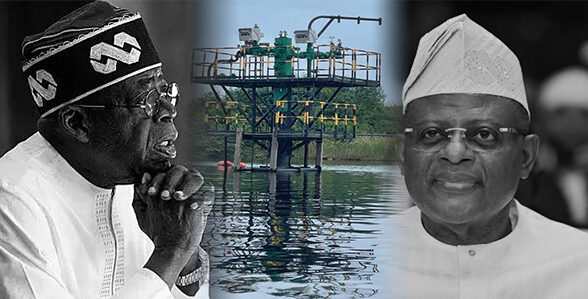
Add us on Google The Inter-Agency Technical Committee (IATC) set up by the Revenue Mobilisation Allocation and Fiscal Commission (RMAFC) verified that Cross River State has 119 crude oil and gas wells and that the state therefore deserves a 13 per cent derivation revenue from those wells. The committee recommended a refund from Akwa Ibom State to Cross River for the money (13 per cent derivation revenue) that Akwa Ibom had been receiving from the 119 wells. “The 119 crude oil and gas wells attributed to Cross River State prior to the exercise were benefited by Akwa Ibom State, as such Akwa Ibom State should refund to Cross River State the 13% enjoyed from the 119 oil and gas wells in form of arrears,” the committee stated. These and other related findings are detailed in the IATC report submitted to the RMAFC in February 2026 for review and subsequent transmission to President Bola Tinubu for consideration. Stay Ahead with Premium Times Follow us on Google News and never miss breaking stories, investigations, and in-depth reporting. Add as a preferred source on Google /* 1. Wrapper & Container / .gn-wrapper { width: 100%; padding: 20px 0; display: flex; justify-content: center; } .gn-card { width: 100%; max-width: 600px; background: #ffffff; padding: 28px; border-radius: 16px; border: 1px solid #e0e0e0; box-shadow: 0 4px 12px rgba(0,0,0,0.08); font-family: 'Segoe UI', Roboto, Helvetica, Arial, sans-serif; } / 2. Header & Premium Times Logo / .gn-header { display: flex; align-items: center; gap: 14px; margin-bottom: 16px; } .gn-logo { height: 36px; / Slightly larger to balance the new text sizes / width: auto; object-fit: contain; } .gn-title { font-size: 22px; margin: 0; color: #1a1a1a; font-weight: 800; } / 3. The Bold Description / .gn-description { font-size: 18px; / Larger size / font-weight: 600; / Bolder weight / color: #202124; / Darker for readability / margin: 0 0 24px 0; line-height: 1.5; } / 4. The High-Impact Button / .gn-button { display: inline-flex; align-items: center; gap: 12px; padding: 14px 24px; border: 1px solid #dadce0; border-radius: 30px; / Modern pill shape / text-decoration: none; background: #ffffff; color: #3c4043; transition: all 0.2s ease-in-out; box-shadow: 0 1px 2px rgba(60,64,67,0.1); } .gn-button-text { font-size: 17px; / Increased font size / font-weight: 700; / Maximum boldness / letter-spacing: 0.1px; } .gn-button:hover { background: #f8f9fa; border-color: #d2d2d2; box-shadow: 0 2px 4px rgba(60,64,67,0.2); transform: translateY(-1px); } .gn-icon { width: 22px; / Matched to larger text size / height: 22px; object-fit: contain; } / 5. 📱 Mobile Optimization / @media (max-width: 480px) { .gn-card { padding: 20px; } .gn-header { flex-direction: column; align-items: flex-start; gap: 10px; } .gn-title { font-size: 20px; } .gn-description { font-size: 16px; } .gn-button { width: 100%; justify-content: center; box-sizing: border-box; padding: 14px 10px; } .gn-button-text { font-size: 15px; / Scaled slightly for small screens / } } Apparently strengthened by the IATC report, which has refuted the long-held belief that Cross River lost its littoral status after Nigeria ceded the Bakassi Peninsula to Cameroon on 14 August 2008, Governor Bassey Otu of Cross River has been calling for a restoration of Cross River’s economic rights. Mr Otu, in February this year in Calabar, told a group of journalists that Cross River accepted to “sacrifice” Bakassi and its oil and gas assets for Nigeria to achieve peace, but that his state and the people have continued to suffer immensely for it. The journalists, including a PREMIUM TIMES reporter, were in Calabar for a fact-finding tour regarding the dispute between Cross River and Akwa Ibom over the oil wells. “Today, we bear the scars, which we believe it is time to change it,” Mr Otu said to the journalists before they embarked on a boat ride to the sea to have a view of the oil platforms and the coastal communities. “To say the least, we are not even asking for more; we are just asking for our own rights. It is Cross River State today; it can be any other state tomorrow,” the governor added. PREMIUM TIMES learnt that some powerful figures within the Nigerian government have been fighting hard to suppress the IATC report to prevent Cross River from regaining the oil and gas wells. However, Mohammed Shehu, chairman of RMAFC, said in a February statement that what the commission received from the IATC was a “draft copy” and that media reports suggesting a proposal to transfer oil wells to Cross River were misleading and premature. “Consistent with established protocol, the draft document has been transmitted to relevant technical and statutory stakeholders, namely the Nigerian Upstream Petroleum Regulatory Commission (NUPRC), the National Boundary Commission (NBC), and the Office of the Surveyor General of the Federation (OSGoF), for detailed review, observations, and technical input,” Mr Shehu said. He said a final report would be transmitted to President Tinubu after RMAFC’s tripartite committees, comprising the committees on crude oil, gas, and investment, and legal matters, had scrutinised the observations and recommendations from the NUPRC, NBC, and OSGoF. Two sources close to the presidency have informed PREMIUM TIMES that the governors of Cross River and Akwa Ibom have already held two meetings on resolving the oil well dispute, on President Tinubu’s directive. The Senate President, Godswill Akpabio, reportedly mediated in one of the meetings. The two states have gone further to set up a technical committee, which has been meeting on the matter, one of the sources added. Senate President Godswill Akpabio mediated a meeting between Gov Otu of Cross River and Gov Eno of Akwa Ibom in Abuja Mr Akpabio’s media aide, Anietie Ekong, confirmed via a Facebook post that the Senate president mediated a meeting on 25 February in Abuja between Governor Otu and Governor Umo Eno of Akwa Ibom State. He posted a photo on the social media site of Mr Akpabio flanked by Messrs Otu and Eno. President Tinubu is said to be disposed to resolving the dispute between the two states mutually, without going through a prolonged bureaucratic or legal process. Cross River and Akwa Ibom are APC-controlled states. The resurfaced oil-well dispute between the two has the potential to cause political damage ahead of crucial elections in 2027, besides the concerns over national security. Cross River has lost trillions of naira, and its economy has been negatively impacted, amid several stalled infrastructure projects and reported job losses since it lost the disputed oil wells to Akwa Ibom. The people of the state, especially the youth, have been apprehensive lately over the renewed dispute. IATC members, mandates, methodology Screenshot of the IATC report Khadija Kumo, the director of the Crude Oil Department at RMAFC, chaired the 13-member IATC, inaugurated on 18 June 2025 by the RMAFC Secretary, Joseph Nwaze. Other members of the IATC were Peter Inyabri (RMAFC), vice chairman; Aderinwale Folorunso (RMAFC), secretary and coordinator; Bulus Emmanuel (NBC); Semiu Ayinde (OSGoF); Jenifer Ekhekide (NUPRC); Azubuike Chinweikpe (OSGoF); Ahmed Hamza (RMAFC); Mukailu Mohammed (NBC); and Aisha Musa (NUPRC). Umar Kulo, Badamasi Muhammad, and Stayford Eyineje ran the committee secretariat. The surveyor-general of all the states that were parties to the disputed wells were observers in the conduct of the IATC activities, according to the report. “The Nigerian Army, Nigerian Navy and other security operatives provided security coverage on land and waters (for the committee),” the report stated. The IATC was set up mainly to verify the coordinates of disputed oil and gas fields and wells, and of newly drilled oil and gas wells in Nigeria’s Niger Delta region from 2017 to December 2025. In the simplest terms, coordinates, in this context, are locations from which oil is drawn. A coordinate is to oil production as a beacon stone is to a land survey. The RMAFC chairman, Mohammed Shehu, while declaring open the coordinates verification exercise on 22 September 2025 in Asaba, Delta State, assured stakeholders of fairness and transparency. He described the exercise as a proactive step toward ensuring the equitable allocation of national resources. The report explained the methodology deployed by the IATC and stated that the exercise took place in two separate phases. “The first phase involved the verification of coordinates submitted by the NUPRC. Physical verification of these coordinates was considered essential, as the committee observed that NUPRC was not the primary source of the data submitted to RMAFC and, therefore, the information could not be relied upon entirely. Any variation in coordinates could significantly affect plotting outcomes. Consequently, the exercise emphasised empirical data collection to ensure accuracy and to minimise agitations upon completion of the exercise. “The second phase entailed the plotting of the verified coordinates on established instruments (maps). “During this phase, the Surveyors-General of all affected States participated, and all issues raised were adequately addressed and clarified.” Continuing, the report stated: “To enhance the accuracy of coordinate acquisition, the RMAFC procured advanced surveying equipment, the Global Navigation Satellite System (GNSS), for the use of the IATC. “The GNSS uses a satellite constellation to determine positions and navigation. Drone technology was also deployed to capture geospatial data, where navigation through terrains were difficult and to overcome challenges posed by uncooperative oil companies. In addition, Satellite Imageries were acquired to obtain the necessary geospatial data.” The committee deployed the Tersus Oscar, a new-generation GNSS RTK system designed for high-precision surveying and mapping, for the coordinates verification. It processed and analysed data collected from all locations visited in Akwa Ibom and Cross River to accurately map the data using ArcGIS. From there, the IATC created a new map of proven oil and gas well locations, both on land and in shallow offshore waters (200m Isobath) in each state. Also, the committee looked at the Supreme Court judgement on the oil-well dispute between Cross River and Akwa Ibom, the Supreme Court judgement on the abrogation of the onshore/offshore dichotomy, and the International Court of Justice (ICJ) ruling in the case between Cameroon and Nigeria, among several other documents. The Surveyor-General of Akwa Ibom, Emem Isang, and her counterpart in Cross River, Patrick Bassey, made presentations to the committee. In addition to the surveyor-general of Cross River, the Chief of Staff to Governor Otu, Emmanuel Ironbar, also made a presentation to the committee about OMLs 114, 123, and 115, which Cross River claimed it was unjustly deprived of its 13 per cent derivation entitlement. “Notably, this exercise marked the first time the IATC had undertaken such a field-based assessment in the disputed area since the eastern portion of the Bakassi Peninsula was ceded to the Republic of Cameroon,” the report stated. The report also stated that the coordinates verification exercise was in compliance with the Supreme Court’s judgement in Suit No. SC.250/2009. In that judgement delivered in 2012, the Supreme Court ruled that, “The 13% derivation revenue on the 76 oil wells offshore between Akwa Ibom State and Cross River State must continue to be attributed to the state on whose maritime territory they are found to be located by the relevant government agencies; that is the National Boundary Commission, the Revenue Mobilisation Allocation and Fiscal Commission relating with the Office of the Surveyor-General of the Federation and the Accountant General of the Federation.” How Cross River lost its oil and gas assets The oil-rich Bakassi Peninsula, before it was ceded to Cameroon in 2008, was part of Cross River and is divided into two parts: the eastern and western. The eastern part of Bakassi was ceded to Cameroon, while the western part remains in Nigeria, and in Cross River, with 49 communities, including Dayspring 1 and 2, Kwa Island, and Abana. With the eastern part of Bakassi intact, Cross River forms a land and maritime boundary with Cameroon through the Akwaya River and its adjoining waters. Meanwhile, following the cession of Bakassi to Cameroon, Nigeria still has outstanding boundary demarcation issues to resolve with the central African country; the two countries are working through the mixed commission to finish marking their shared border. But while this had not yet been completed, a map, recently disowned by the OSGoF, was used several years back to justify the allocation of the disputed 76 oil wells to Akwa Ibom. “The map was not produced by the Office of the Surveyor-General of the Federation, as it does not contain the standard coordinate records utilised by the Office,” the OSGoF said in 6 October 2025, in a response to an enquiry from the Cross River State Government. The 76 oil wells are located in the western part of Bakassi, in Cross River, according to IATC findings. Persons knowledgeable about the matter alleged that the Supreme Court judgements that favoured Akwa Ibom regarding the 76 oil wells were based on flawed documents and maps. Michael Aondoakaa, former attorney-general of the federation Michael Aondokaa, a former attorney-general of the federation, had led the Nigerian delegation to the UN-backed Nigeria-Cameroon Mixed Commission. Mr Aondokaa told Channels TV in February that Nigeria as a country would have been removed from the maritime map showing the country’s boundary with Cameroon if Cross River were removed, puncturing one of Akwa Ibom’s primary arguments that Cross River does not have direct access to the sea. “In the map that was submitted to the National Assembly at that time, in 2008, it was clear that there was access to the sea through the Calabar Estuaries,” Mr Aondokaa argued. Cross River surveyor-general, Mr Bassey, and the former Speaker of Cross River State House of Assembly, John Lebo, corroborated Mr Aondokaa’s position that the Calabar estuary provides Nigeria with access to the sea. Cross River Surveyor-General, Patrick Bassey, explaining to journalists why Nigeria has to return oil wells to Cross River “Our own (Nigeria’s) continental shelf is elongated because the estuaries are still flowing to the sea. That is why the UN extended our continental shelf after the (ICJ) judgement by 16,300,” Mr Lebo told the visiting journalists as he and other officials guided them through the sea. “So the Nigerian continental shelf is no longer 200m Isobath; it is 220m,” he added. Mr Lebo later gave another perspective to the dispute. “The mistake Akwa Ibom is making is that if you come and say this water belongs to Akwa Ibom and that everything under it belongs to them, it’s not correct because oil is not drilled from one location,” the former Cross River speaker told PREMIUM TIMES. “For instance, that is why Akwa Ibom is sharing oil with Rivers State. Akwa Ibom has more water boundary than Rivers, but Rivers is collecting more than them because in the reservoir, they are tapping more from Rivers – it is the percentage of the reservoir sharing. “Rivers State is sharing oil with Imo State, Imo is sharing with Abia, Delta is sharing with Edo, Bayelsa is sharing with Ondo. Lagos is sharing with Dahomey Basin, with Benin Republic. “Even among countries, the reservoir that straddles between two countries, they sit down and sign treaties for joint production. So, Akwa Ibom cannot say that all the reservoirs we are drilling are only in Akwa Ibom, that they don’t cross into Cross River. It’s not correct,” he argued. Mr Aondokaa told Seun Okinbaloye, the anchor of Channels TV’s Politics Today, that after leaving office as the attorney-general of the federation, he was “lost” when he heard people say that Cross River does not have direct access to the sea. When asked if the Supreme Court judgement that favoured Akwa Ibom was faulty, Mr Aondokaa said the court relied on the maps and documents presented to it. Mr Okinbaloye asked Mr Aondokaa whether he thinks that Cross River deserves to regain its status as an oil-producing state. “I think so,” he responded. “I don’t even think they ought to have been deprived (in the first place),” he added. The former attorney-general of the federation said there are instances in which the Supreme Court reverses itself if it is glaring that there was a miscarriage of justice and that a judgement was obtained through misrepresentation, apparently referring to the possibility of the Supreme Court reversing itself in the Akwa Ibom-Cross River dispute. Moreover, he said the Supreme Court judgement is tied to the 76 oil wells, and not the new ones discovered by the IATC. This, he said, leaves room for President Tinubu to resolve the matter through a political solution. ‘I am a comrade. I have toughness’ Governor Otu was available for an interview in the evening when the journalists returned from the sea. “Where you went to today is the only navigational channel into Nigeria, and it is in Cross River,” Mr Otu said to the journalists, dismissing Akwa Ibom’s argument that the state lacks direct access to the sea. On the Supreme Court judgement, the governor reiterated the Cross River’s position that the facts presented to the judges were “fraudulent”. “Coordinates don’t lie,” he said. “The ICJ judgement is not enforceable; what is enforceable is the Green Tea Agreement, and the Supreme Court never saw that Green Tea Agreement. “We have over 300 oil wells in Cross River. Take off anything that is controversial, take off the 76 oil wells. Give us what is ours. We have suffered enough, we can’t take it anymore.” One of the journalists asked Mr Otu what his predecessors did about the 76 oil well dispute and why it took Cross River over 20 years to speak up. “It has been the policy of this administration to draw a line. I don’t know the challenges they faced at the time. “I am a comrade. I have toughness and resilience,” the governor responded. For Akwa Ibom, the argument remains the same – that the oil wells belong to them, and the Supreme Court, being the final court of arbitration in Nigeria, has said so. “There are two Supreme Court judgements that give Akwa Ibom State the right to those oil wells. We are not sharing maritime boundaries with Cross River State but with the Republic of Cameroon, and the Nigerian Supreme Court has said so twice to establish this fact,” Governor Eno said in February. “There is no cause for alarm. The people on the other side may cook up any story they want; raise propaganda, but this propaganda has no effect in the face of the two Supreme Court decisions establishing our ownership of the oil wells. This is not about sentiments,” the governor added. Share this: Click to share on X (Opens in new window) X Click to share on Facebook (Opens in new window) Facebook Click to share on WhatsApp (Opens in new window) WhatsApp Click to share on Telegram (Opens in new window) Telegram Click to share on LinkedIn (Opens in new window) LinkedIn Click to email a link to a friend (Opens in new window) Email Click to print (Opens in new window) Print Stay Ahead with Premium Times Follow us on Google News and never miss breaking stories, investigations, and in-depth reporting. Add as a preferred source on Google / 1. Wrapper & Container / .gn-wrapper { width: 100%; padding: 20px 0; display: flex; justify-content: center; } .gn-card { width: 100%; max-width: 600px; background: #ffffff; padding: 28px; border-radius: 16px; border: 1px solid #e0e0e0; box-shadow: 0 4px 12px rgba(0,0,0,0.08); font-family: 'Segoe UI', Roboto, Helvetica, Arial, sans-serif; } / 2. Header & Premium Times Logo / .gn-header { display: flex; align-items: center; gap: 14px; margin-bottom: 16px; } .gn-logo { height: 36px; / Slightly larger to balance the new text sizes / width: auto; object-fit: contain; } .gn-title { font-size: 22px; margin: 0; color: #1a1a1a; font-weight: 800; } / 3. The Bold Description / .gn-description { font-size: 18px; / Larger size / font-weight: 600; / Bolder weight / color: #202124; / Darker for readability / margin: 0 0 24px 0; line-height: 1.5; } / 4. The High-Impact Button / .gn-button { display: inline-flex; align-items: center; gap: 12px; padding: 14px 24px; border: 1px solid #dadce0; border-radius: 30px; / Modern pill shape / text-decoration: none; background: #ffffff; color: #3c4043; transition: all 0.2s ease-in-out; box-shadow: 0 1px 2px rgba(60,64,67,0.1); } .gn-button-text { font-size: 17px; / Increased font size / font-weight: 700; / Maximum boldness / letter-spacing: 0.1px; } .gn-button:hover { background: #f8f9fa; border-color: #d2d2d2; box-shadow: 0 2px 4px rgba(60,64,67,0.2); transform: translateY(-1px); } .gn-icon { width: 22px; / Matched to larger text size / height: 22px; object-fit: contain; } / 5. 📱 Mobile Optimization / @media (max-width: 480px) { .gn-card { padding: 20px; } .gn-header { flex-direction: column; align-items: flex-start; gap: 10px; } .gn-title { font-size: 20px; } .gn-description { font-size: 16px; } .gn-button { width: 100%; justify-content: center; box-sizing: border-box; padding: 14px 10px; } .gn-button-text { font-size: 15px; / Scaled slightly for small screens */ } }