Osmund Agbo: Honouring a great mind with the Thabo Mbeki Award for Scholarship and Service, By Toyin Falola
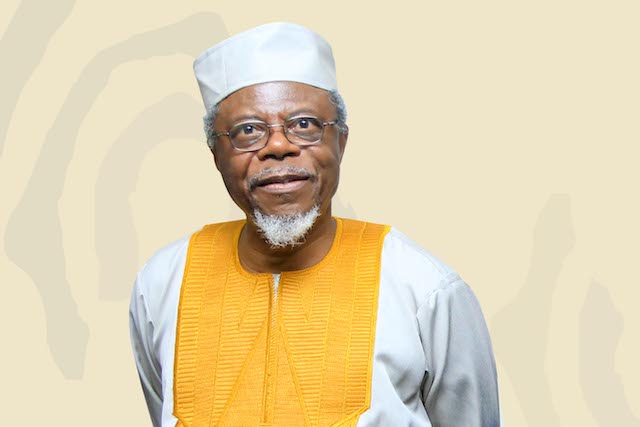
Add us on Google Dr Osmund Agbo The constant exposure to the extremes of humanity by Agbo shapes his perspective as a physician-writer. The understanding of the disparities, in terms of access to health care and health outcomes, compared to his previous experiences in Nigeria, contributes to his knowledge and understanding of the moral responsibility of a physician, particularly in the areas of end-of-life care, patient autonomy, and the dichotomy of preserving life versus preserving dignity. When the announcement of an extraordinary award was made to honour Dr Osmund Agbo, it fell on a unique personality, Professor Bridget Teboh of the University of Massachusetts, to receive it on his behalf. The Thabo Mbeki Award for Public Service and Scholarship is awarded to an African who has distinguished him/herself in the public or private sector. The recipient of the award must be of high calibre, with an unblemished record of service. The awardee must be committed to the project of African transformation. The 2026 winner is Mr Osmund Agbo, who combines the voices of science, storytelling, and the society at large. Agbo’s name rings a bell in discussions centred around Nigerian physician-writers, whose clinical practices have reinforced literary creativity over the years. Although Osmund was trained as a medical doctor in Nigeria, he has subsequently practiced as a pulmonologist and critical care physician in the United States. He has since occupied a peculiar intellectual corridor, with his scientific knowledge and humanistic curiosity. This rare privilege allows him to tackle issues surrounding pain, death, and guilt outside the hospital premises as well. Agbo studied Medicine at Nnamdi Azikwe University, Awka, in Anambra State. While there, he encountered Nigeria’s poorly running health system due to its fragility and inadequacies. Perhaps it is fair to say that Nigeria’s vulnerable health system played a role in creating the duality of Agbo as a medical doctor and writer. Upon completing his studies in Medicine, he decided to migrate to another country. He moved to America, where he could further sub-specialise in pulmonary medicine and critical care. Mr Agbo has been able to practice his craft where technology and the system aren’t flawed. Aside from being a competent doctor, Osmund Agbo has also made a name for himself as a prolific essayist and novelist, by using his talent in telling stories to address issues of systemic failure, diaspora concerns, and the intricacies of contemporary African problems. It is of significant note to add that the career path of Dr Agbo can be traced to his transnational experience of immigration from Nigeria to the United States. This journey redefined his medical practice and literary voice. His dual positioning, his Nigerian origin and Western influences, offer him the opportunity to juxtapose and compare healthcare systems, interrogate global inequalities, and reflect on the implications of migration, most especially for skilled professionals. His career as a medical doctor not only contributes to these experiences; they are visible in his essays and fiction, as he recurrently questions identity, belonging, and responsibility. Stay Ahead with Premium Times Follow us on Google News and never miss breaking stories, investigations, and in-depth reporting. Add as a preferred source on Google /* 1. Wrapper & Container / .gn-wrapper { width: 100%; padding: 20px 0; display: flex; justify-content: center; } .gn-card { width: 100%; max-width: 600px; background: #ffffff; padding: 28px; border-radius: 16px; border: 1px solid #e0e0e0; box-shadow: 0 4px 12px rgba(0,0,0,0.08); font-family: 'Segoe UI', Roboto, Helvetica, Arial, sans-serif; } / 2. Header & Premium Times Logo / .gn-header { display: flex; align-items: center; gap: 14px; margin-bottom: 16px; } .gn-logo { height: 36px; / Slightly larger to balance the new text sizes / width: auto; object-fit: contain; } .gn-title { font-size: 22px; margin: 0; color: #1a1a1a; font-weight: 800; } / 3. The Bold Description / .gn-description { font-size: 18px; / Larger size / font-weight: 600; / Bolder weight / color: #202124; / Darker for readability / margin: 0 0 24px 0; line-height: 1.5; } / 4. The High-Impact Button / .gn-button { display: inline-flex; align-items: center; gap: 12px; padding: 14px 24px; border: 1px solid #dadce0; border-radius: 30px; / Modern pill shape / text-decoration: none; background: #ffffff; color: #3c4043; transition: all 0.2s ease-in-out; box-shadow: 0 1px 2px rgba(60,64,67,0.1); } .gn-button-text { font-size: 17px; / Increased font size / font-weight: 700; / Maximum boldness / letter-spacing: 0.1px; } .gn-button:hover { background: #f8f9fa; border-color: #d2d2d2; box-shadow: 0 2px 4px rgba(60,64,67,0.2); transform: translateY(-1px); } .gn-icon { width: 22px; / Matched to larger text size / height: 22px; object-fit: contain; } / 5. 📱 Mobile Optimization / @media (max-width: 480px) { .gn-card { padding: 20px; } .gn-header { flex-direction: column; align-items: flex-start; gap: 10px; } .gn-title { font-size: 20px; } .gn-description { font-size: 16px; } .gn-button { width: 100%; justify-content: center; box-sizing: border-box; padding: 14px 10px; } .gn-button-text { font-size: 15px; / Scaled slightly for small screens / } } Anyone who works in Medicine would understand the mental stress and implications that surround working in the intensive care unit (ICU). This is where Agbo operates and gathers his experiences as a medical professional. In the ICU, the boundaries between life and death are fragile, and the physician functions as more than merely a clinical decision-maker but a witness to human vulnerability. This redefines Agbo’s role beyond diagnosis and treatment, but as an observer of the emotional, psychological, and existential dimensions of illnesses. Considering the nature of critical care medicine, in which doctors are exposed to patients in their most vulnerable states, what is first required is emotional intelligence, rather than medical knowledge. These experiences have given Agbo an uninterrupted engagement with the ideas of mortality, suffering, and others. Thus, what is created is the space of a physician-writer, in which stories of hope, suffering, and grief are enacted every day. The constant exposure to the extremes of humanity by Agbo shapes his perspective as a physician-writer. The understanding of the disparities, in terms of access to health care and health outcomes, compared to his previous experiences in Nigeria, contributes to his knowledge and understanding of the moral responsibility of a physician, particularly in the areas of end-of-life care, patient autonomy, and the dichotomy of preserving life versus preserving dignity. Osmund Agbo undoubtedly takes a spot in the first row when physician-writers whose voices interrogate social realities in Nigeria and the diaspora are being discussed. His columns published in reputable, such as PREMIUM TIMES and Ikenga Online, alone are a testament to this fact. Agbo engages a wide readership on issues that extend beyond Medicine but include politics, sociology, the Nigerian society, and its diasporic extensions. What makes his essays unique is his style that merges his personal experience with objective social analysis. One may argue that his expertise in science influences his work as a writer, in which his philosophical ideas are glaringly manifested. His knowledge of the vulnerability and strength of humans is also manifested in his works. This experience makes him best understood within the framework of “narrative medicine,” which is a concept whose significance is well acknowledged. The central concept of this implies the ability to recognise, interpret, and be informed by patients’ stories, which is central to effective medical care, and Agbo’s dual identity places him within this tradition. One of the predominant themes in Agbo’s writings is the irredeemable failure of Nigerian institutions. He continues exploring the nemesis that continues to befall the healthcare, education, and political sectors by critiquing systemic inefficiencies and the normalisation of dysfunction. This would later lead to the cross-examination of the motivation behind the “japa” phenomenon by the Nigerian youth, as well as the psychological and moral tensions faced by those who leave. Another recurring theme in his essays is his critique of meritocracy and the popular notion of “self-made” individuals. He challenges this idea with a counter notion that proves the invisible networks of support and privilege that make success achievable. Agbo, hence, becomes a preacher and defender of social mobility and communalism. Although his works are neither purely academic nor overtly journalistic or classist, he creates a middle ground that is accessible to all and, at the same time, intellectually engaging. This often allows him to communicate his social diagnoses directly to the masses. His creative works, including The Velvet Court: Courtesan Chronicles and Pray, Let the Shaman Die, portray a serious engagement with the complexities of human desire and power by interrogating the deeper structures of society and the human psyche. Another distinguishing feature of his storytelling is the exploration of complex characters within an equally complex environment. Oftentimes, his protagonists are rarely idolised; they are instead flawed individuals who are trying to navigate a system plagued by inequality, corruption, and an inconsistent value system. As he strives to reveal the mystery of power, in reference to gender, class, and power itself, he also strives to reveal the mystery of other social issues, such as government, religion, and culture, in the personal decision-making process. In his novel, The Velvet Court, which I had the privilege of reading twice, there is a quest to reveal the mystery of a space where issues of personal agency, exploitation, and hypocrisy in society are of interest. His stories, on other occasions, are like those of Soyinka’s in the quest to reveal the mystery of issues of tradition, modernity, and their contradictions in society. One may argue that his expertise in science influences his work as a writer, in which his philosophical ideas are glaringly manifested. His knowledge of the vulnerability and strength of humans is also manifested in his works. This experience makes him best understood within the framework of “narrative medicine,” which is a concept whose significance is well acknowledged. The central concept of this implies the ability to recognise, interpret, and be informed by patients’ stories, which is central to effective medical care, and Agbo’s dual identity places him within this tradition. Oftentimes in scientific settings, patients are reduced to charts, diagnoses, and biomedical data, but Agbo’s writings innovate a new architecture by representing the human stories that only exist in charts through compelling narratives. Through his essays, we are educated that illness is not just a biological event but a personal and social experience, which is shaped by fear, memory, relationships, and even cultural context. In this sense, it is arguable that storytelling as a medical practitioner could be a coping mechanism; that is, a means of processing the emotional and psychological demands of clinical practice. In the toast to him in my reception room, I asked over 50 people to join me in a song composed the day before: Osmund Agbo, healer of bodies, sculptor of words, You walk two sacred paths with a single heartbeat— One hand steady with the pulse of life, The other dipped in ink, tracing the soul of a people. Ọmọ ilẹ̀ Naijiria, child of many rivers, You listen where pain hides—in veins, in voices, in verses. In the clinic, you wage quiet wars against silence and suffering, In your pages, you resurrect truths buried beneath time. Physician of flesh, yes— But more, physician of memory. You stitch wounds no scalpel can reach, You diagnose history’s long misread. Your pen is not a mere ornament— It is a stethoscope pressed against the chest of the nation, Hearing the irregular rhythms of injustice, Recording the murmurs of forgotten lives. Like the ancient griots, you do not forget. Like the modern sage, you do not relent. Between science and story, you build bridges— Where knowledge heals, and healing speaks. Dr Agbo, we hail you— For knowing that medicine is more than a cure, And literature more than art. Both are acts of restoration. May your words continue to breathe life, May your hands continue to carry light, May your journey remain a testament— That intellect, when guided by compassion, becomes destiny Ase. Congratulations! Toyin Falola, a professor of History, University Distinguished Teaching Professor, and Jacob and Frances Sanger Mossiker Chair in the Humanities at The University of Texas at Austin, is the Bobapitan of Ibadanland. Share this: Click to share on X (Opens in new window) X Click to share on Facebook (Opens in new window) Facebook Click to share on WhatsApp (Opens in new window) WhatsApp Click to share on Telegram (Opens in new window) Telegram Click to share on LinkedIn (Opens in new window) LinkedIn Click to email a link to a friend (Opens in new window) Email Click to print (Opens in new window) Print Stay Ahead with Premium Times Follow us on Google News and never miss breaking stories, investigations, and in-depth reporting. Add as a preferred source on Google / 1. Wrapper & Container / .gn-wrapper { width: 100%; padding: 20px 0; display: flex; justify-content: center; } .gn-card { width: 100%; max-width: 600px; background: #ffffff; padding: 28px; border-radius: 16px; border: 1px solid #e0e0e0; box-shadow: 0 4px 12px rgba(0,0,0,0.08); font-family: 'Segoe UI', Roboto, Helvetica, Arial, sans-serif; } / 2. Header & Premium Times Logo / .gn-header { display: flex; align-items: center; gap: 14px; margin-bottom: 16px; } .gn-logo { height: 36px; / Slightly larger to balance the new text sizes / width: auto; object-fit: contain; } .gn-title { font-size: 22px; margin: 0; color: #1a1a1a; font-weight: 800; } / 3. The Bold Description / .gn-description { font-size: 18px; / Larger size / font-weight: 600; / Bolder weight / color: #202124; / Darker for readability / margin: 0 0 24px 0; line-height: 1.5; } / 4. The High-Impact Button / .gn-button { display: inline-flex; align-items: center; gap: 12px; padding: 14px 24px; border: 1px solid #dadce0; border-radius: 30px; / Modern pill shape / text-decoration: none; background: #ffffff; color: #3c4043; transition: all 0.2s ease-in-out; box-shadow: 0 1px 2px rgba(60,64,67,0.1); } .gn-button-text { font-size: 17px; / Increased font size / font-weight: 700; / Maximum boldness / letter-spacing: 0.1px; } .gn-button:hover { background: #f8f9fa; border-color: #d2d2d2; box-shadow: 0 2px 4px rgba(60,64,67,0.2); transform: translateY(-1px); } .gn-icon { width: 22px; / Matched to larger text size / height: 22px; object-fit: contain; } / 5. 📱 Mobile Optimization / @media (max-width: 480px) { .gn-card { padding: 20px; } .gn-header { flex-direction: column; align-items: flex-start; gap: 10px; } .gn-title { font-size: 20px; } .gn-description { font-size: 16px; } .gn-button { width: 100%; justify-content: center; box-sizing: border-box; padding: 14px 10px; } .gn-button-text { font-size: 15px; / Scaled slightly for small screens */ } }